
Navigating the Messy Middle: Making Senior Transitions Easier for Bay Area Families
A practical and compassionate guide to managing care, conflict, and home transitions
Dale Corpus
11/25/20254 min read
Navigating the Messy Middle: Strategy and Empathy for Senior Transitions in the Bay Area
Hey Bay Area caregivers! From the rolling hills of Napa and Solano to the busy streets of San Francisco and the tech hubs of Santa Clara and Alameda, many of us—the ‘sandwich generation’—are finding ourselves balancing raising our own families while managing the complex logistics of our aging parents. The journey of senior transition—downsizing, selling the family home, and finding the right care—is often fraught with emotional stress and difficult family dynamics.
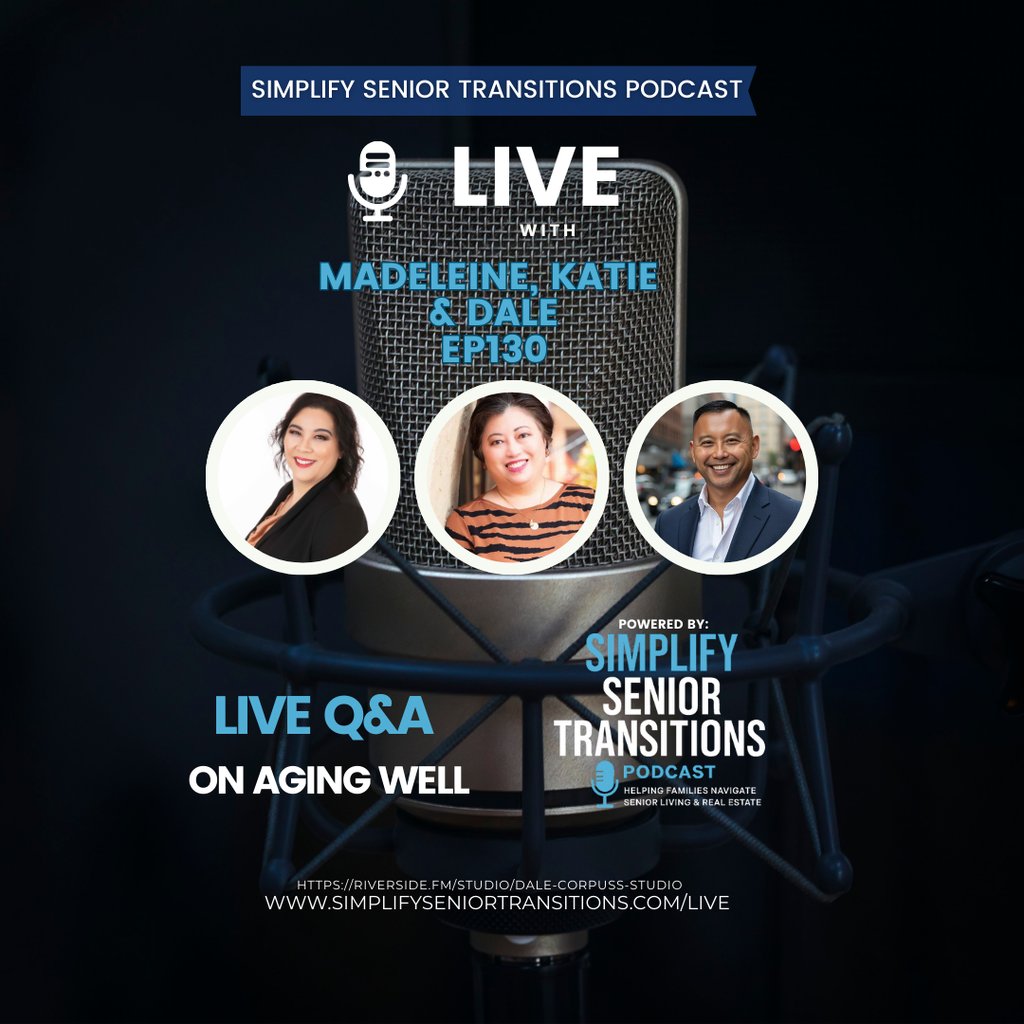
In our latest episode of the Simplify Senior Transitions Podcast, "Live with Madeleine, Katie, and Dale," we didn’t sugarcoat the process. We dove into the messy reality of family dynamics, offering insight and empathy for those facing these high-stakes transitions.
Our host, Dale Corpus, is a Senior Transition Specialist and Seniors Real Estate Expert in the San Francisco Bay Area, holding experience in real estate since 2001 and an RCFE administrator certificate. He works specifically with families navigating sales, trust/probate issues, and finding funding for long-term care. Joining him are Katie Perez, bringing 25 years of mortgage and financial experience, and Madeleine Fortich, a local Realty One Group agent and life agent who specializes in planning and protecting assets. Their combined expertise provides a holistic view of the financial, legal, and emotional hurdles we face.
Here's what you'll learn in this episode
This episode tackles the real-life issues that emerge when aging meets logistics, covering senior care, housing decisions, and long-term planning. Specifically, we explored:
How to navigate guilt, resentment, and criticism when adult children disagree about care decisions.
Why naming a Power of Attorney (POA) is critical before a medical crisis and how to address a parent’s fear of losing control.
Strategies for achieving family alignment, even when a sibling lives out of state or refuses to help.
The reality of emotional stress and guilt felt after moving a loved one into assisted living.
Addressing Conflict with Mindfulness and Strategy
When you feel like you are the only sibling doing everything, it’s easy for criticism and resentment to build. Madeleine advises starting these high-stakes family engagements with a deep breath and a commitment to mindfulness. The core focus should be the shared goal: providing the best care for mom or dad.
Remember, not everyone can contribute equally, but everyone has different strengths. One sibling might be skillful with logistics, another with medical coordination, or a third with the financial and legal aspects. Leveraging these individual strengths can distribute the load and lead to better outcomes. If siblings are out-of-state, family meetings—even on Zoom—are essential for alignment.
Regarding the out-of-state sibling who refuses to help? If diplomacy fails, sometimes the best choice is to let it go. Stirring the pot can create animosity. However, Dale points out that if they can’t help physically, they could still contribute with paperwork or bills. Everyone should contribute in some way (time, money, or emotional labor).
Planning Ahead: The Power of Attorney Discussion
A major source of family drama arises when a parent avoids naming a Power of Attorney (POA), often because they fear giving up control. Katie explains that parents view this step as entering a different stage of life, which is scary.
It’s crucial to remind parents that a POA doesn't mean they lose control. They can limit the authority to specific situations (like real estate or medical needs). Dale emphasizes that naming a POA before a crisis is “one of the smartest kindness things a parent can do for their kids,” bringing clarity to the whole family.
We debunked the fiction that you should wait until a parent is confused to set up legal documents. Lawyers often won't work with incapacitated individuals, making planning impossible at that point. Madeleine stresses that legal documents, including POAs and living trusts, need to be reviewed regularly because they can become invalid over time. As Dale states: Talk to an elder law attorney now, not during the ER visit.
The Guilt of Assisted Living
For many families here in the Bay Area, transitioning a loved one to assisted living—often funded by selling the family home—is accompanied by intense guilt. This is especially true for cultures where caring for parents at home is deeply ingrained.
If you feel this relief mixed with guilt, know that it is normal, and it is a sign that you care deeply. The most important question is: Are you able to provide the best care they need?
When professionals handle the caregiving, you are no longer trying to figure out caregiving as you go. Instead, you can return to being the best version of yourself—the loving son or daughter—when you visit.
Finally, remember that when tough decisions about care (and funding) need to be made, you do not need unanimous consent to move forward. Freezing, like the proverbial ostrich sticking its head in the sand, only makes the loved one suffer and increases family tension. A decision must be made. Having instructions clearly in writing through a living trust provides a guideline that removes the burden of rehashing arguments.
Need Help Navigating a Senior Transition?
When a parent needs care and there’s a home involved, families often have more options than they realize. You don’t have to figure it out alone.
Care Funding Calculator
Estimate how income, assets, and home equity may help pay for senior care:
https://www.simplifyseniortransitions.com/care-funding-calculator
Podcast Episode Library
Browse conversations with senior living experts, elder law attorneys, home care leaders, financial professionals, and families navigating these decisions every day:
https://www.simplifyseniortransitions.com/podcastlibrary
Start Here - Personalized Guidance + Resources
Explore resources, ask questions using the AI Resource Explorer, or connect with Dale directly:
https://www.simplifyseniortransitions.com/starthere
P.S. Got news or an amazing story to share? Hit us up at dale@simplifyseniortransitions.com and you might be featured in our next episode! Remember, always check out the transcript for detailed insights. Happy listening!
Watch The Podcast Here


📞 GET IN TOUCH
📬 STAY INFORMED
Dale Corpus, SRES, RCFE
CA DRE# 01305153 | NMLS# 339169
📱 925-380-1657
© 2026. All rights reserved.
🔎 LEARN MORE


PROUD MEMBER OF