Funding Care Without Regret
How families coordinate housing, equity, and care decisions strategically — not reactively.
Care decisions are emotional.
Funding decisions should not be.
Many families underestimate both the cost and duration of care. The key is understanding your full range of options before making irreversible decisions.
The Cost of Care Is Often Higher Than Expected
Most families focus on the monthly number first.
But the more important question is:
How long will care be needed?
In-home care, assisted living, and memory care can range widely depending on geography and level of support. What many families underestimate is duration — care often extends for several years, not several months.
Without a coordinated funding strategy, even strong financial reserves can erode quickly.
Understanding the full picture before making housing or care decisions is critical.
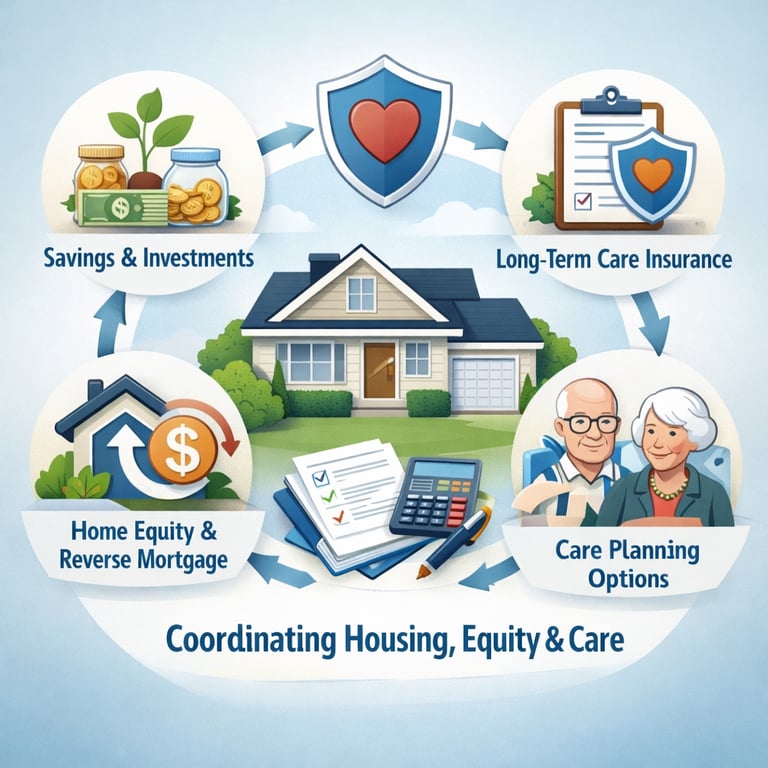
The Four Funding Paths
Most Families Use a Combination of These
There is rarely a single solution that funds long-term care.
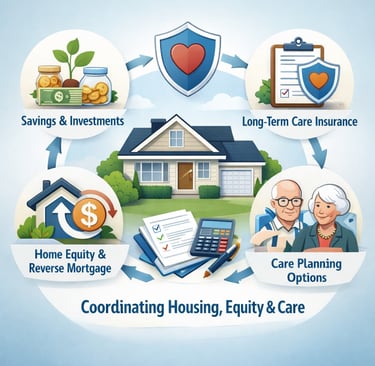
In most cases, families coordinate multiple resources together. Understanding each option — and how they interact — is key to avoiding reactive decisions.
1. Personal Savings & Investments
Many families initially rely on cash reserves, retirement accounts, or brokerage assets to fund care.
While this provides immediate flexibility, without a broader strategy, savings can deplete faster than expected — especially when care extends over multiple years.
The question is not simply whether savings exist, but how long they are sustainable.
2. Long-Term Care Insurance
Long-term care insurance can offset a portion of care expenses when policies are in place and properly structured.
For some families, it provides meaningful protection. For others, eligibility, timing, or policy limitations may reduce its usefulness.
Insurance is a planning tool — not a universal solution — and must be evaluated in context.
3. Home Equity (Including Reverse Mortgage)
For many households, the primary residence represents the largest financial asset.
Home equity can sometimes provide flexibility through a coordinated sale strategy or, in certain situations, a reverse mortgage structure.
The key is understanding how housing decisions align with care timelines and long-term financial goals.
In some situations, a reverse mortgage may provide flexibility. If you would like a personalized eligibility overview, we can connect you with a trusted specialist.
4. Strategic Property Sale
When a home sale becomes part of the transition, timing and preparation matter.
Selling too quickly — or without understanding alternatives — can reduce net proceeds and limit options.
A coordinated approach considers market conditions, tax implications, family dynamics, and future care needs.
If you need introductions to trusted professionals in any of these areas — including real estate, funding strategy, or care planning — our National Senior Transition Referral Network is available nationwide.
The Four Funding Paths
• Waiting until crisis
• Selling the home without coordination
• Ignoring funding timelines
• Evaluating insurance without context
A Structured Approach to Care Funding
Download our Senior Care Funding Blueprint to better understand how housing decisions, equity, insurance, and care planning work together.
Prefer to Talk It Through?
If you would like help thinking through your situation calmly and strategically, you may request a brief Transition Clarity conversation.

Need a Trusted Referral?
We connect families nationwide to vetted professionals in:
• Real estate
• Reverse mortgage
• Long-term care insurance
• Care management
• Legal support
Explore our National Senior Transition Referral Network →
Transitions Made Simple
Helping seniors transition with ease and peace.
📍 Real Estate Services – San Francisco Bay Area
🔁 National Senior Transition Referral Network
🌎 Strategic Advisory & Professional Intensives – Available Nationwide via Zoom
📞 GET IN TOUCH
📬 STAY INFORMED
© 2026. All rights reserved.
🔎 LEARN MORE