
Why Senior Care Feels So Fragmented
Understanding the Systems Families Must Navigate
Dale Corpus
2/6/20263 min read
Navigating the Maze: Why Senior Care Feels Fragmented and How Bay Area Families Can Find Clarity
If you are an adult child living in the San Francisco Bay Area—whether you’re in Contra Costa, Alameda, Santa Clara, San Mateo, San Francisco, Solano, or Napa counties—you likely know the heavy, overwhelming feeling of trying to help an aging parent.
You’re balancing your own career, your kids, and the sudden, complex needs of your parents. It is emotionally exhausting, and if you feel like you are piecing everything together alone, you are not imagining it.
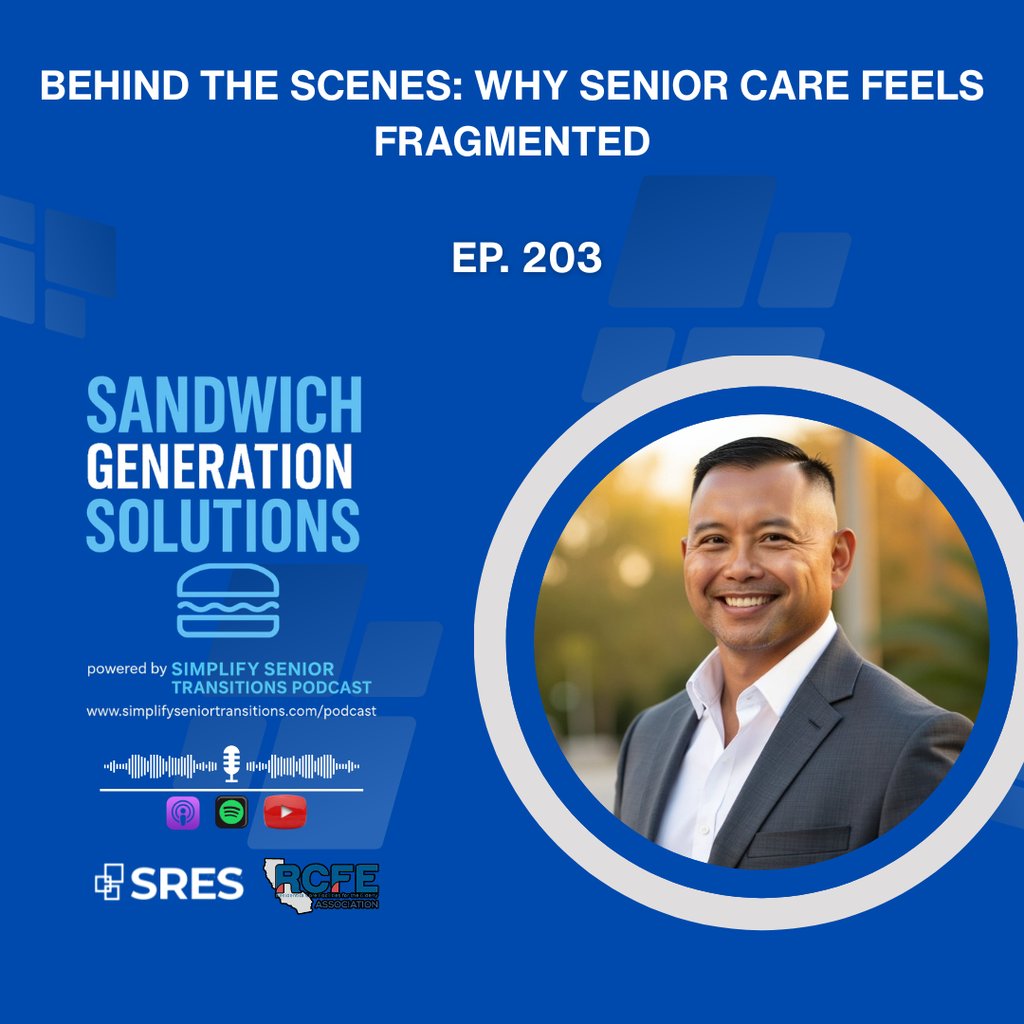
In the latest episode of Sandwich Generation Solutions, powered by the Simplify Senior Transitions Podcast, host Dale Corpus—a senior transition specialist and Bay Area real estate expert—takes us behind the scenes to explain exactly why the senior care ecosystem feels so disconnected.
Here’s What You’ll Learn in This Episode
Why senior care operates as a collection of separate systems rather than one unified pathway.
The specific, limited roles that hospitals, rehab centers, and home care agencies play in your parent's journey.
Why early coordination, rather than unlimited financial resources, is the true secret to a smooth transition.
How to proactively manage the logistics and emotional stress of downsizing, selling a senior's home, and choosing the right care options.
The Illusion of a Unified System
The first major takeaway from this episode is a reality check: senior care isn't one single system.
Instead, it is a fragmented collection of healthcare, housing, home care, rehabilitation, insurance, legal, and financial planning systems. Each of these silos has its own rules, timelines, and incentives—and they evolved entirely independently of one another.
When a crisis hits, you might start at the hospital. But a hospital’s primary job is simply to stabilize the immediate medical issue, not to plan for your parent's long-term independence.
Once stabilized, your parent may be transferred to short-term rehabilitation, which focuses only on the physical progress that can be made within a strict insurance window.
From there, families often hire a home care agency, which provides hourly caregivers to help with tasks like bathing, medication reminders, and daily routines. However, these agencies are not designed to coordinate the bigger picture of housing decisions, finances, or long-term care planning.
Because none of these providers automatically communicate seamlessly with one another, families often become the bridge connecting them all.
Facing the Challenges: Housing, Care, and Emotional Stress
For families in the sandwich generation, stepping into the role of care coordinator creates enormous pressure. Suddenly, you are expected to understand a complex system you’ve never had to navigate before.
One of the most daunting hurdles families face is deciding when and how to transition a parent to a senior living community. This decision usually arises after a fall, caregiver burnout, or escalating care needs.
That transition brings a combination of practical and emotional challenges. Families must:
Evaluate different care options such as assisted living, memory care, or independent living
Navigate the emotional process of downsizing decades of belongings
Manage the logistics of selling a senior’s home
Coordinate financial planning to fund long-term care
Handling these housing, medical, and financial decisions simultaneously can create immense emotional stress.
The Secret to Calm: Coordination Over Resources
So how do overwhelmed caregivers find peace?
Dale highlights a powerful insight: the families who experience the most stability are not necessarily the ones with the most resources—they are the ones with the most coordination.
When professionals such as care providers, housing advisors, financial planners, and real estate experts collaborate earlier in the process, the entire journey becomes more structured.
Instead of reacting to emergencies, families can move forward with a thoughtful, coordinated plan.
By working with professionals who understand the intersection of real estate, housing transitions, and senior care, families can relieve themselves of the burden of managing every moving part alone.
Need Help Navigating a Senior Transition?
When a parent needs care and there’s a home involved, families often have more options than they realize. You don’t have to figure it out alone.
Care Funding Calculator
Estimate how income, assets, and home equity may help pay for senior care:
https://www.simplifyseniortransitions.com/care-funding-calculator
Podcast Episode Library
Browse conversations with senior living experts, elder law attorneys, home care leaders, financial professionals, and families navigating these decisions every day:
https://www.simplifyseniortransitions.com/podcastlibrary
Start Here - Personalized Guidance + Resources
Explore resources, ask questions using the AI Resource Explorer, or connect with Dale directly:
https://www.simplifyseniortransitions.com/starthere
P.S. Got news or an amazing story to share? Hit us up at dale@simplifyseniortransitions.com and you might be featured in our next episode! Remember, always check out the transcript for detailed insights. Happy listening!
Watch The Podcast Here

📞 GET IN TOUCH
📬 STAY INFORMED
Dale Corpus, SRES, RCFE
CA DRE# 01305153 | NMLS# 339169
📱 925-380-1657
© 2026. All rights reserved.
🔎 LEARN MORE



PROUD MEMBER OF