
When Parents Say “I’m Fine” but Families Know They’re Not
Understanding Fear, Resistance, and Timing in Senior Care Conversations
Dale Corpus
1/27/20263 min read
When “I’m Fine” Means “I’m Scared”: Navigating Parental Resistance to Senior Care Transitions
Let me paint a picture for you: Your parent had a fall, forgot their medication, or left the stove on. Suddenly, the entire family is panicking, texting siblings, and losing sleep while researching options. But when you finally sit down and suggest getting some help, they simply reply, “I’m fine. I don’t need anyone. Stop treating me like a child.”
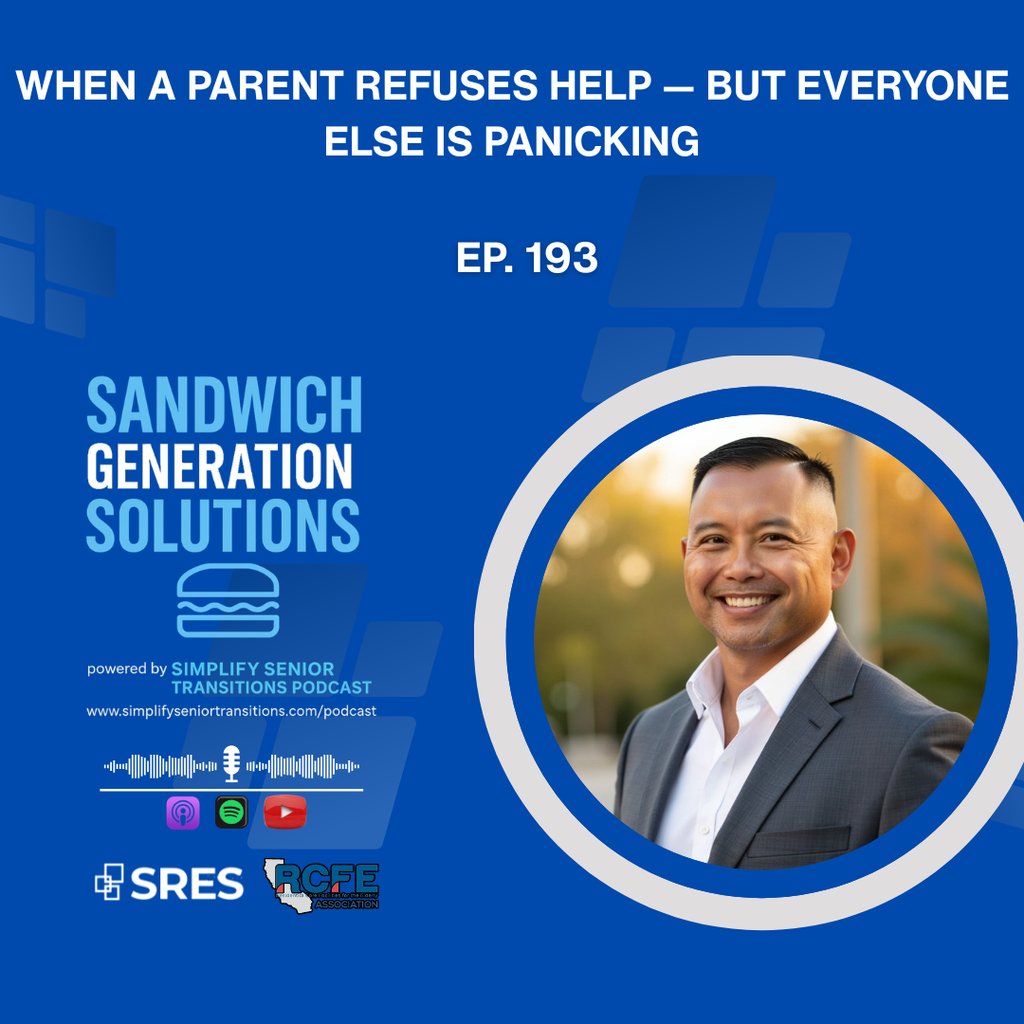
As an overwhelmed family caregiver in the San Francisco Bay Area—whether you’re located in Contra Costa, Alameda, Santa Clara, San Mateo, or San Francisco counties, or even neighboring Solano and Napa counties (Please note: Solano and Napa counties were not explicitly mentioned in today's podcast source, but the family dynamics there are exactly the same!)—managing this tension is exhausting. I’m Dale Corpus, a senior transition specialist and seniors real estate expert, and we are unpacking all of this in the latest episode of the Simplify Senior Transitions Podcast.
Here’s what you’ll learn in this episode:
Why a parent's refusal is rarely about denial and almost always about fear.
The psychological drivers behind why pushing harder often backfires.
Exact scripts to use—and what to avoid—when discussing care.
How to identify the perfect timing windows to introduce support.
Tips for managing the emotional stress of choosing care options, downsizing, and selling a senior's home. (Note: While downsizing and selling homes are key challenges I help families with as a real estate expert, the podcast source specifically focuses on managing the emotional stress of care transitions and parental resistance.)
Understanding the Disconnect: When Panic Meets Pride
Most adult children assume refusal means their parent is in denial, but it is actually driven by fear. For seniors, especially in our high-achieving Bay Area communities, independence has been their core identity for decades. When you say they need help, they hear that they are declining, losing control, or becoming a burden.
Here is the major disconnect: families see the risk, while parents feel lost. You are terrified they might fall again, but they are terrified of their life shrinking and having strangers in their home. When your panic meets their pride, the result is deep conflict.
Tackling the Big Transitions: Downsizing and Choosing Care Options
As a seniors real estate expert, I know that discussing care options, navigating the daunting task of downsizing, and preparing to sell a senior’s home brings immense emotional stress. While the physical move is tough, the emotional hurdle is even tougher because aging often feels like control is slipping away. Families often grieve a parent's decline months or years before the parent does, creating a severe timing mismatch that causes tension.
Scripts and Strategies That Actually Work
So, how do we get past the resistance? First, know what not to say. Phrases like “You’re not safe,” “You are being stubborn,” or “You have no choice” will immediately trigger defensiveness, even if they are entirely true. Instead of authority, try curiosity and collaboration.
Instead of saying, “You need help,” try: “I’ve been feeling anxious about you being alone. Can we talk about what would make both of us feel more comfortable?” Instead of saying, “You can’t drive anymore,” try: “What would it look like to add just a little extra support, not change everything?”
Timing matters more than persuasion. The best moments for these conversations are after a fall, a hospitalization, a near miss, or when they finally admit to feeling tired, because reality briefly interrupts their denial.
Protecting the Relationship Above All Else
You cannot force emotional readiness; you can only build conditions that make it safer for them to say yes. Use repeated calm conversations, involve trusted third parties like doctors to recommend support, and try framing home care simply as “help around the house” rather than “caregiving.”
What if they still say no? Focus quietly on what you can control: install grab bars, simplify medications, and adjust their driving exposure. Keep the relationship intact, because if you destroy trust, you lose your influence. (Important caveat: If refusal is paired with significant memory issues, poor judgment, or paranoia, this may be cognitive decline rather than emotional pride, which requires immediate safety planning with care managers, physicians, and legal professionals.)
Need Help Navigating a Senior Transition?
When a parent needs care and there’s a home involved, families often have more options than they realize. You don’t have to figure it out alone.
Care Funding Calculator
Estimate how income, assets, and home equity may help pay for senior care:
https://www.simplifyseniortransitions.com/care-funding-calculator
Podcast Episode Library
Browse conversations with senior living experts, elder law attorneys, home care leaders, financial professionals, and families navigating these decisions every day:
https://www.simplifyseniortransitions.com/podcastlibrary
Start Here - Personalized Guidance + Resources
Explore resources, ask questions using the AI Resource Explorer, or connect with Dale directly:
https://www.simplifyseniortransitions.com/starthere
P.S. Got news or an amazing story to share? Hit us up at dale@simplifyseniortransitions.com and you might be featured in our next episode! Remember, always check out the transcript for detailed insights. Happy listening!
Watch The Podcast Here

📞 GET IN TOUCH
📬 STAY INFORMED
Dale Corpus, SRES, RCFE
CA DRE# 01305153 | NMLS# 339169
📱 925-380-1657
© 2026. All rights reserved.
🔎 LEARN MORE



PROUD MEMBER OF