
The Unexpected Antidote to Transition Stress
Why Animals Bring Calm During Senior Transitions
Dale Corpus
12/5/20254 min read
The Unexpected Antidote to Transition Stress: Why Pet Therapy Might Be Better Than Medication
If you are currently helping an aging parent in the San Francisco Bay Area—maybe you’re in Contra Costa struggling with downsizing, or in Santa Clara trying to find the right memory care community—you know the stress can be overwhelming. As family caregivers, we navigate endless decisions about housing, finance, and most importantly, emotional well-being.
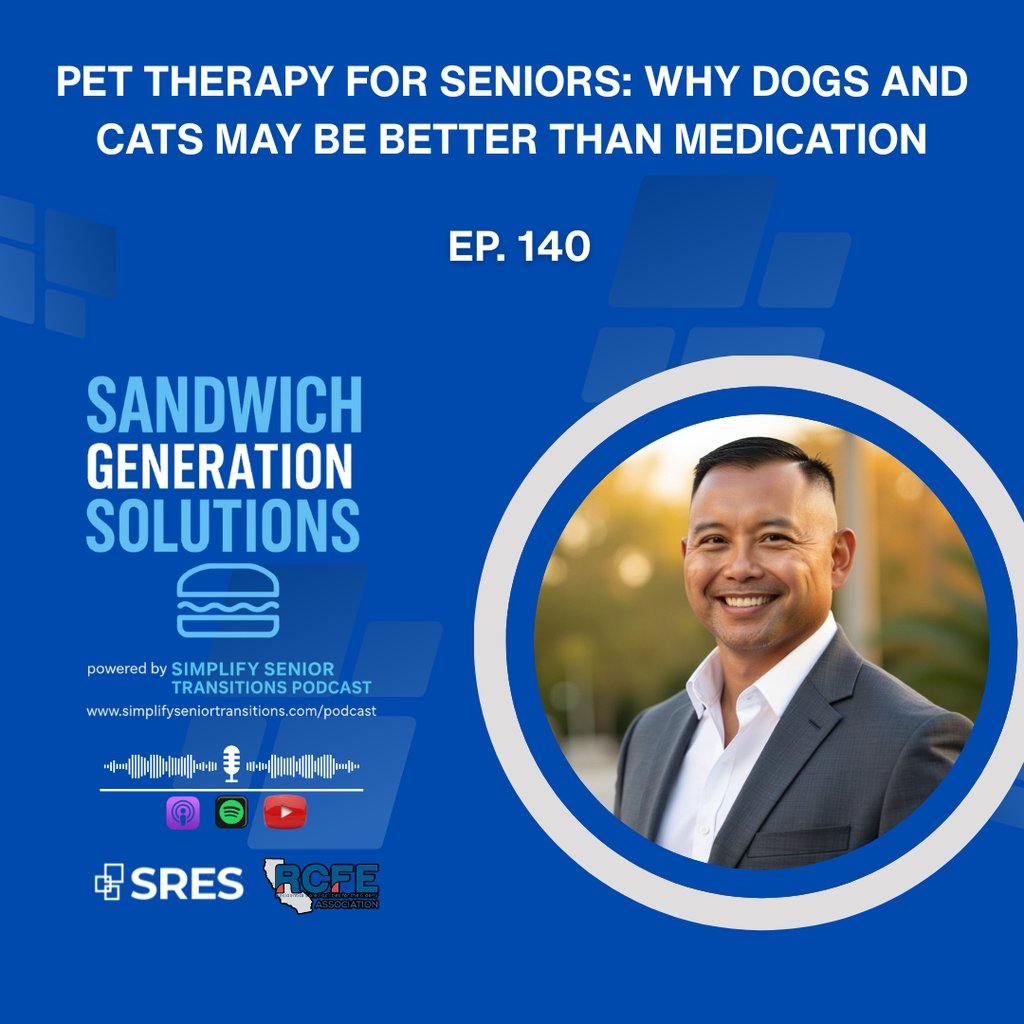
The latest episode of Sandwich Generation Solutions, powered by the Simplify Senior Transitions Podcast, dives into a surprising tool that offers profound emotional relief during these difficult times: pet therapy. Dale Corpus, a senior transition specialist and seniors real estate expert based in the Bay Area, helps families navigate senior care, housing, and the emotional journey that comes with supporting aging parents. This episode proves that sometimes, the simplest connection can be the most effective medicine.
Here's what you'll learn in this episode:
Why interacting with animals changes the neurochemistry of the brain, releasing happiness chemicals and reducing the stress hormone cortisol. How even a brief five-minute interaction with a pet can lower blood pressure and reduce agitation in seniors. The three major ways seniors can interact with animals—therapy animals, service animals, and companion pets. A key rule of thumb for determining if your parent should have a live pet at home, and powerful alternatives if they can’t. Where to find incredible local pet therapy organizations right here in the Bay Area, spanning counties like Alameda, San Mateo, and Contra Costa.
Finding Peace Amidst the Chaos of Transition
The journey to senior living is often packed with logistics and heavy lifting: downsizing a lifetime of possessions, selling a senior’s home, and the exhaustive process of choosing care options. All of this creates enormous emotional stress for both the adult child and the parent.
When the logistics become unbearable, the senior’s emotional state—especially if they are dealing with depression, anxiety, or dementia—can feel like the final breaking point. Medication can certainly calm a person down, but according to Dale, animals make them feel connected, and that is something no pill can truly replicate.
Dale shared a moving example from a memory care community in San Mateo: A woman named Elizabeth rarely spoke due to her progressing dementia. When a volunteer brought in a therapy dog, Cooper, Elizabeth looked up, smiled, and began softly petting him. Her daughter cried, noting it was the most present she had seen her mother in weeks. That tiny spark of connection is what pet therapy delivers.
The Science of Snuggles: How Pets Change the Brain
Pet therapy isn't acute or optional; it is literally changing the neurochemistry of the brain. Researchers know that when a senior pets a dog or cat, the brain releases oxytocin, serotonin, and dopamine—chemicals linked to calm, happiness, and bonding. Simultaneously, cortisol, the stress hormone, decreases.
For seniors struggling with mid-stage Alzheimer’s, as in the case of the Martinez family from Fremont, this emotional regulation is huge. Before pet therapy visits, Mrs. Martinez would pace around the house and refuse to eat or sit. After introducing short visits from a trained therapy dog, she sat down on the very first visit and stroked the dog’s fur for 20 minutes. Pet therapy didn't cure her dementia, but it opened windows of joy and calm that fundamentally changed the atmosphere in the household.
Options Beyond the Full-Time Pet
Many family caregivers considering this option wonder: Should my parent get a real pet?
Here is the truth: A senior should not have a live pet if they cannot safely care for themselves. Caring for a pet requires mobility, cognition, and assistance with grooming, feeding, and vet visits.
But Dale emphasizes that you don't need a full-time pet to get full-time benefits. Alternatives shine brightly, especially here in the Bay Area:
Therapy Animals: These are trained dogs, cats, or even birds that visit communities or private homes. They are especially powerful because they are trained to sense mood changes and approach gently. Robotic Pets: For seniors who cannot safely interact with live animals, robotic pets work too. They purr, nuzzle, and respond to touch, helping fill the gap left by loneliness. Mrs. Chen from San Bruno, who struggled with depression after her husband passed, bonded emotionally with her robotic cat, which provided comfort and companionship. Local Bay Area Resources: We have incredible organizations like PAWS (Pets are Wonderful Support) and Furry Friends—Pet-Assisted Therapy Services. Memory care communities and assisted living facilities throughout Contra Costa, Alameda, Santa Clara, and San Mateo counties often have visiting programs, and many organizations offer in-home visits for seniors supported at home.
Need Help Navigating a Senior Transition?
When a parent needs care and there’s a home involved, families often have more options than they realize. You don’t have to figure it out alone.
Care Funding Calculator
Estimate how income, assets, and home equity may help pay for senior care:
https://www.simplifyseniortransitions.com/care-funding-calculator
Podcast Episode Library
Browse conversations with senior living experts, elder law attorneys, home care leaders, financial professionals, and families navigating these decisions every day:
https://www.simplifyseniortransitions.com/podcastlibrary
Start Here - Personalized Guidance + Resources
Explore resources, ask questions using the AI Resource Explorer, or connect with Dale directly:
https://www.simplifyseniortransitions.com/starthere
P.S. Got news or an amazing story to share? Hit us up at dale@simplifyseniortransitions.com and you might be featured in our next episode! Remember, always check out the transcript for detailed insights. Happy listening!
Watch The Podcast Here

📞 GET IN TOUCH
📬 STAY INFORMED
Dale Corpus, SRES, RCFE
CA DRE# 01305153 | NMLS# 339169
📱 925-380-1657
© 2026. All rights reserved.
🔎 LEARN MORE



PROUD MEMBER OF