
The Right to Folly: How Letting Go Helps You Care Better
A guide to balancing safety, independence, and sanity for Bay Area families.
Dale Corpus
12/4/20254 min read
The Right to Folly: Why Loving Your Aging Parent Means Letting Go of Control
If you're an adult child in the Bay Area—juggling work, family, and the overwhelming task of planning for your parents’ future in Contra Costa, Alameda, or Santa Clara county—you know the stress is real. We often find ourselves in the sandwich generation, trying to balance raising our own kids while caring for our aging loved ones.
It’s natural to feel that protecting your parent means controlling every single risk, especially when navigating major senior transitions like downsizing, selling the family home, and choosing care. But what if true care means allowing them the freedom to keep being themselves, even if it comes with some risk?
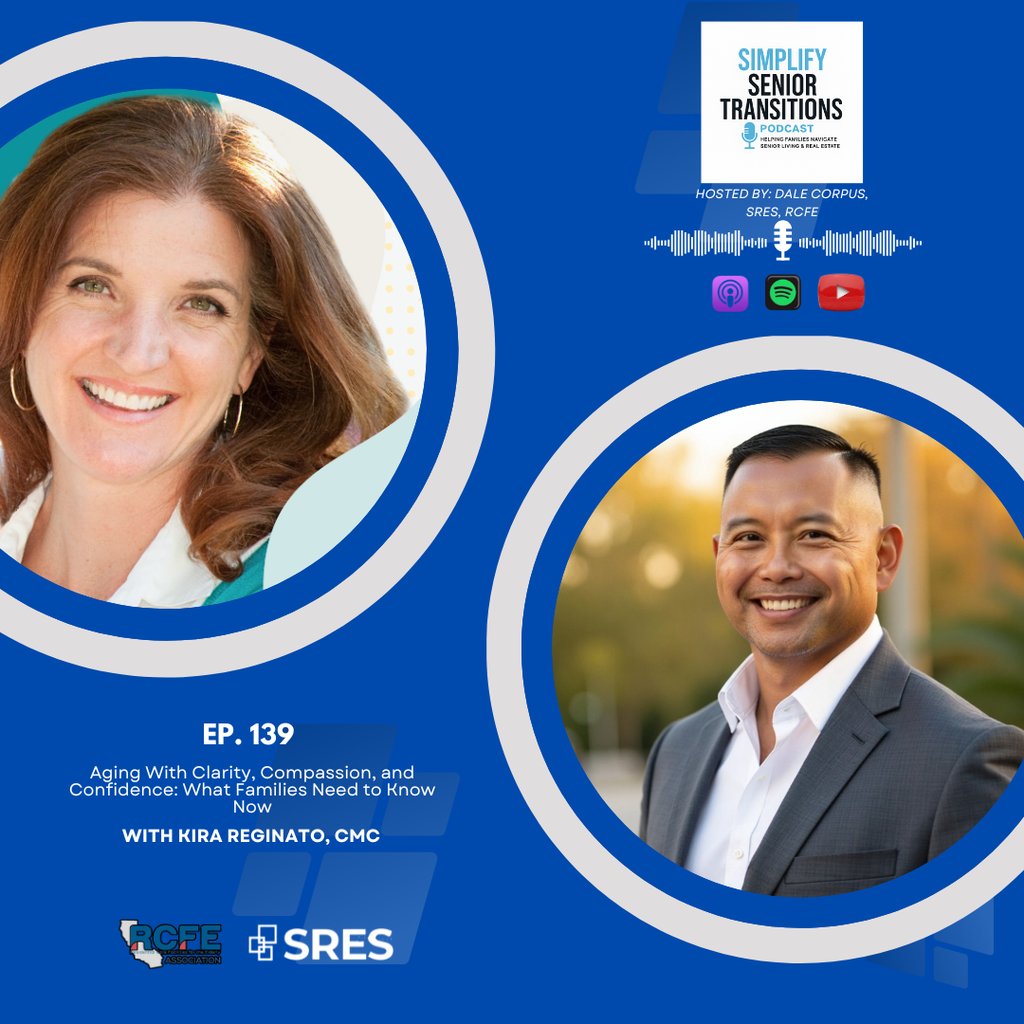
That powerful idea, "The Right to Folly," was the focus of our latest Simplify Senior Transitions podcast episode with guest Kira Reginato. Kira is a certified geriatric care manager, gerontologist, author, and owner of Living Ideas for Elders. Having worked in elder care for decades, Kira's expertise is rooted in preserving the dignity and independence of older adults. Her mission is to decrease the high levels of stress (cortisol) coursing through both parents and adult children as they face these complex aging decisions. She understands the local landscape, serving Sonoma, Napa, Mendocino, and Lake counties, and connecting families in San Francisco and Marin with trusted colleagues.
Here's what you'll learn in this episode:
This episode is essential for overwhelmed caregivers looking to find peace and clarity in the transition process:
The Right to Folly: Understanding why older adults, just like any other adults, have the right to make unwise or foolish decisions, and how to stop institutions and families from stripping away that autonomy.
Balancing Autonomy and Safety: Practical tips for families struggling to balance a parent's desire for independence with the reality of increasing physical or cognitive risks.
Managing Emotional Stress: How adult children can reframe their mindset from control to acceptance and avoid burnout from constantly nagging or trying to force change.
Choosing Quality Care: Why smaller board and care homes may offer better, more attentive care than large, corporate senior living communities, especially in areas like San Mateo and Solano counties.
The Right to Risk: Reframing Your Relationship
As Kira points out, we often treat our parents like children, using controlling language like "I allow my parent to do X or Y". Once we’re adults, we get to do what we want, even unhealthy things, and that doesn't change when we age.
If you find yourself constantly nagging your parents about taking their meds, eating healthier, or making better choices, you are likely fracturing your relationship. Instead of becoming the "parent," focus on honoring their goals and autonomy.
To reduce emotional stress and burnout, Kira offers key questions to help adult children reframe their mindset:
Who is Your Parent? If your parent has been a risk-taker their whole life (like the client who enjoys getting up on the roof), that personality needs to factor into your decisions.
Step Into Their Shoes: How would you feel if you couldn’t drive anymore, or if you lost the ability to control your own daily schedule? Gaining this perspective helps you understand their resistance.
When Should We Intervene? The Cost of Cleanup
It can be difficult to discern between a reasonable risk (a folly) and a truly dangerous situation. Kira suggests intervening when a person’s actions hurt other people (like reckless driving) or severely endanger themselves or their neighbors (like smoking near an oxygen tank).
A key metric for intervention is the cost of the mistake or the consequences of cleaning up the mess. If a parent gets a DUI, the consequences include thousands of dollars in fines, loss of driving privileges, and the family (spouse or adult child) having to provide all transportation—a high price to pay. If the consequence impacts the entire system (medical, judicial) or requires the family to clean up an expensive mess, intervention may be necessary.
Navigating Care Options and Home Transitions
For families in the Bay Area handling the complexities of downsizing and selling a senior's home, choosing the right care environment is critical. Kira notes that the senior care industry has seen a rise in "greed," with beautiful buildings often built for shareholders rather than for quality resident care.
Caring makes good care, not the amount of money paid per month.
Kira often recommends small board and care homes because they typically have less staff turnover and staff are better attuned to residents' changing needs and symptoms. In contrast, large, corporate facilities might prioritize amenities like happy hour over individualized attention, making them feel independent but not truly caring. When touring communities, ask about staff training, staffing ratios, and turnover, and whenever possible, look for family-owned or non-profit options.
Need Help Navigating a Senior Transition?
When a parent needs care and there’s a home involved, families often have more options than they realize. You don’t have to figure it out alone.
Care Funding Calculator
Estimate how income, assets, and home equity may help pay for senior care:
https://www.simplifyseniortransitions.com/care-funding-calculator
Podcast Episode Library
Browse conversations with senior living experts, elder law attorneys, home care leaders, financial professionals, and families navigating these decisions every day:
https://www.simplifyseniortransitions.com/podcastlibrary
Start Here - Personalized Guidance + Resources
Explore resources, ask questions using the AI Resource Explorer, or connect with Dale directly:
https://www.simplifyseniortransitions.com/starthere
P.S. Got news or an amazing story to share? Hit us up at dale@simplifyseniortransitions.com and you might be featured in our next episode! Remember, always check out the transcript for detailed insights. Happy listening!
Watch The Podcast Here

📞 GET IN TOUCH
📬 STAY INFORMED
Dale Corpus, SRES, RCFE
CA DRE# 01305153 | NMLS# 339169
📱 925-380-1657
© 2026. All rights reserved.
🔎 LEARN MORE


PROUD MEMBER OF