
The Most Dangerous 72 Hours in Senior Care
Why Hospital Discharge Is a Critical Turning Point for Aging Parents
Dale Corpus
2/1/20264 min read
Navigating the Critical Inflection Point: Why Hospital Discharge Is a Senior’s Most Dangerous Moment
If you are an adult child caring for an aging parent in the San Francisco Bay Area—whether you are navigating life in Contra Costa, Alameda, Santa Clara, San Mateo, San Francisco, Solano, or Napa counties—you already know how overwhelming it can be. Balancing your own life while managing a loved one's emotional stress, weighing confusing care options, and contemplating massive housing changes is no small feat.
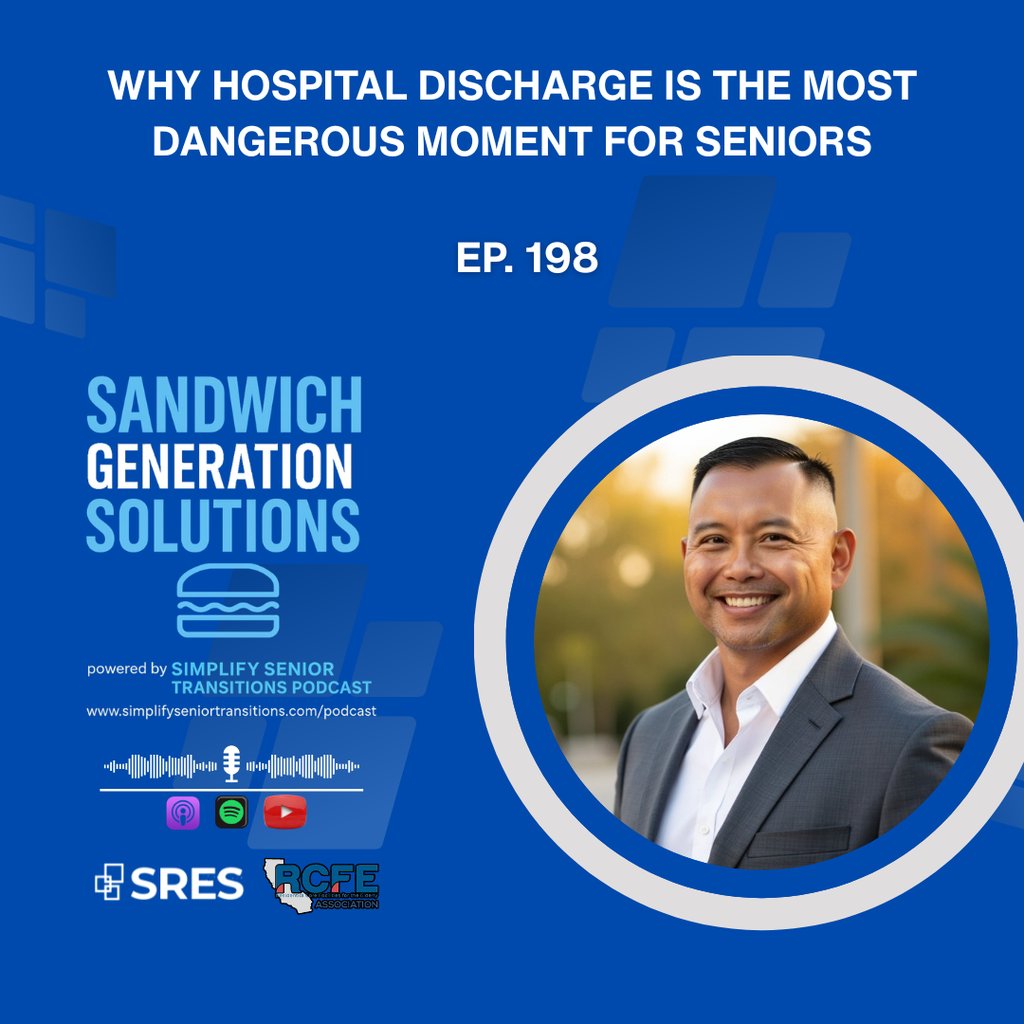
In the latest episode of Sandwich Generation Solutions, powered by the Simplify Senior Transitions Podcast, host and senior real estate expert Dale Corpus shines a light on a hidden crisis many families face.
Most people assume the most dangerous moment for an older adult is a sudden medical event, like a bad fall or a stroke. But the reality is quite different.
Here’s What You’ll Learn in This Episode
Why the 24 to 72 hours after a hospital discharge is actually the most dangerous window for seniors.
How the healthcare system's “countdown clock” forces rushed decisions about care and housing.
The three major reasons discharge creates chaos, including physical fragility and emotional flooding.
Why a senior's current home might no longer be safe—and how this impacts the overwhelming process of downsizing or selling a senior's home.
Practical, actionable steps you can take right now to assess care options, manage emotional stress, and prevent a secondary crisis.
The Illusion of the Hospital Discharge
When a parent is hospitalized, families understandably rush in. Doctors stabilize the patient, and almost suddenly, you are told they are ready for discharge.
Here is the hard truth families need to hear: hospitals are designed to stabilize, not to solve long-term issues.
Because insurance companies dictate discharge timelines, families are abruptly forced to make massive housing and care decisions while on a stressful countdown clock. This pressure-cooker environment often leads to preventable mistakes, rushed choices, and intense family conflict.
Three Reasons Discharge Triggers Danger
Dale explains that a hospital discharge becomes a dangerous inflection point for three distinct reasons:
1. Physical Decline
Even after a short hospital stay, seniors often suffer from “post-hospital syndrome.” This can include muscle loss, balance decline, medication changes, and cognitive confusion.
While families naturally assume a discharged parent is “better” because they get to come home, physically they are often much weaker.
2. Emotional Flooding
Family caregivers are usually sleep-deprived, financially stressed, and terrified during the discharge process.
Making major decisions—like hastily deciding to take shifts or hiring a quick fix—during emotional flooding rarely works out well.
3. The Housing Collision
This is where care needs directly clash with real estate.
Many Bay Area homes simply are not discharge-ready due to stairs, narrow hallways, a lack of grab bars, or excess clutter. In just 48 hours, families must suddenly decide whether they need:
In-home care
A short-term rehab facility
An assisted living community
Or to sell the house entirely to afford care
Breaking the Cycle of Reacting and Scrambling
Without a solid plan, a terrifying pattern can emerge: a parent goes home, falls again within 30 days, and ends up right back in the hospital.
At that point, the urgency doubles. Injuries are often worse. Families face the exact same decisions—with even less time.
Real estate quickly becomes a vital piece of this puzzle. When a parent cannot safely return home, families often need to access the home's equity to pay for immediate care or an assisted living community.
If siblings are not aligned and the home has not been assessed, this leads to financial chaos, which only fuels more family conflict.
Practical Tips for Overwhelmed Families
To avoid this crisis, slow things down and focus on these practical steps:
Focus on the Short-Term
Instead of trying to figure out “forever,” ask:
What is the safest option for the next 30 days?
Assess Functional Reality
Do not rely on optimism. Honestly evaluate whether your parent can safely:
Climb stairs
Use the bathroom independently
Manage medications on their own
Separate Urgency from Panic
Medical urgency is real. Emotional panic only makes the situation worse.
Bring in Professionals Early
Do not wait for the countdown clock. Engage care managers, senior transition specialists, and trusted advisors early on.
Proactive planning—like installing grab bars, starting housing conversations early, and ensuring financial transparency—turns a terrifying scramble into a manageable adjustment.
Hospital Discharge Is More Than a Medical Event
Hospital discharge is not just a medical event. It is:
A housing event
A financial event
A family systems event
Understanding this before you find yourself standing in a hospital hallway under pressure will help you make better, safer decisions for the ones you love.
Ready to Plan Ahead?
Need Help Navigating a Senior Transition?
When a parent needs care and there’s a home involved, families often have more options than they realize. You don’t have to figure it out alone.
Care Funding Calculator
Estimate how income, assets, and home equity may help pay for senior care:
https://www.simplifyseniortransitions.com/care-funding-calculator
Podcast Episode Library
Browse conversations with senior living experts, elder law attorneys, home care leaders, financial professionals, and families navigating these decisions every day:
https://www.simplifyseniortransitions.com/podcastlibrary
Start Here - Personalized Guidance + Resources
Explore resources, ask questions using the AI Resource Explorer, or connect with Dale directly:
https://www.simplifyseniortransitions.com/starthere
P.S. Got news or an amazing story to share? Hit us up at dale@simplifyseniortransitions.com and you might be featured in our next episode! Remember, always check out the transcript for detailed insights. Happy listening!
Watch The Podcast Here

📞 GET IN TOUCH
📬 STAY INFORMED
Dale Corpus, SRES, RCFE
CA DRE# 01305153 | NMLS# 339169
📱 925-380-1657
© 2026. All rights reserved.
🔎 LEARN MORE



PROUD MEMBER OF