
The Hidden Federal Program That Could Pay for Your Parent’s In-Home Care
Laura Welsh reveals how families of former atomic workers may qualify for lifelong medical benefits—plus up to $250,000 in tax-free compensation.
Dale Corpus
6/6/20253 min read
Navigating Senior Transitions: The Hidden Federal Benefit That Could Change Everything
Transitioning an aging parent to senior living—or simply ensuring they receive the best possible care at home—can feel overwhelming.
For families in the San Francisco Bay Area, the process often includes downsizing, selling a family home, choosing care options, and managing significant emotional and financial stress.
But what if there were a lesser-known program that could dramatically reduce that burden?
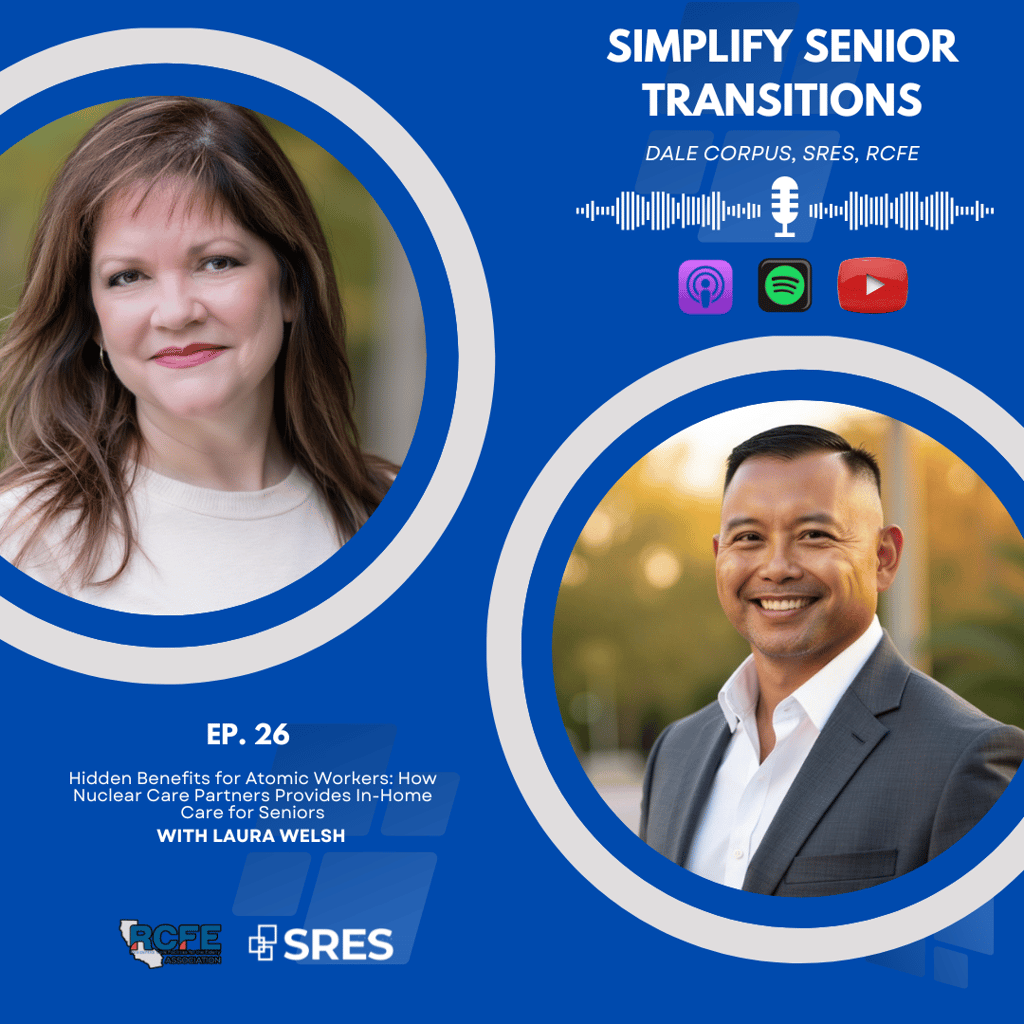
In a recent episode of the Simplify Senior Transitions Podcast, Dale Corpus sits down with Laura Welsh, California Community Outreach Manager at Nuclear Care Partners, to uncover a powerful federal benefit many families don’t know exists.
Here's What You'll Learn in This Episode:
• What the Energy Employees Occupational Illness Compensation Program Act (EEOICPA) is
• Who qualifies for this federal benefit program
• What illnesses are covered—and the compensation available
• How families can receive free in-home healthcare
• How the claims process works and where to start
• Why so many eligible families are unaware of this program
Understanding the EEOICPA Program: A Lifeline for Families
The Energy Employees Occupational Illness Compensation Program Act (EEOICPA) was established in 2000 to support individuals who became ill due to exposure while working in the atomic weapons industry.
This program provides:
• Tax-free compensation up to $250,000
• Lifetime medical benefits for covered conditions
Qualifying illnesses include:
• Certain cancers
• Lung diseases such as silicosis
• Beryllium disease
• Conditions linked to toxic chemical exposure, including Parkinson’s
This federally funded program has already distributed billions in medical benefits and compensation—yet many families still don’t know it exists.
The Real Impact: Reducing Financial and Emotional Stress
For families navigating senior care, costs can quickly become overwhelming.
Between medical expenses, caregiving, and potential housing decisions, the pressure adds up.
This program can significantly reduce that burden by covering healthcare costs and providing compensation.
For many families, this means:
• Less financial strain
• More flexibility in care decisions
• Reduced urgency around selling a home to fund care
It creates space for families to make thoughtful decisions instead of reactive ones.
Free In-Home Care: What It Actually Includes
One of the most powerful aspects of this program is access to comprehensive in-home healthcare.
Services may include:
• Registered Nurses (RNs) and Licensed Vocational Nurses (LVNs)
• Home Health Aides (HHAs) and Certified Nursing Assistants (CNAs)
• Assistance with daily activities
• Medical equipment and oxygen support
• Specialized care programs
Care plans are tailored to each individual and can range from a few hours per day to 24/7 support.
In some cases, even family caregivers can be compensated for the care they provide.
This is not short-term care—it is ongoing support designed for chronic conditions.
Navigating the Claims Process
While the program may sound complex, families don’t have to navigate it alone.
Organizations like Nuclear Care Partners help guide applicants through the process by:
• Coordinating with government resource centers
• Gathering medical documentation
• Assisting with eligibility verification
• Connecting families with authorized representatives
Approval is based on a 50% causation standard—meaning the illness must be “at least as likely as not” linked to workplace exposure.
Timelines can vary, but the potential benefit makes it worth exploring.
Why So Many Families Miss This Opportunity
Despite its scale, the program remains underutilized.
Common reasons include:
• Lack of awareness
• Long latency periods between exposure and illness
• Difficulty recalling work history
• Misunderstanding of eligibility requirements
Many seniors may not even realize they qualify—especially if they worked at facilities decades ago.
Why This Matters for Bay Area Families
The Bay Area is home to several qualifying sites, including:
• Lawrence Livermore National Laboratory
• Lawrence Berkeley National Laboratory
• Sandia National Laboratories
Thousands of individuals who worked at these facilities—or similar sites nationwide—may be eligible.
Even if your family is unsure, it is worth exploring.
A Powerful Reminder: You Don’t Have to Do This Alone
Senior transitions are complex—but the right information can change everything.
Programs like EEOICPA exist to support families, reduce stress, and provide care with dignity.
Need Help Navigating a Senior Transition?
When a parent needs care and there’s a home involved, families often have more options than they realize. You don’t have to figure it out alone.
Care Funding Calculator
Estimate how income, assets, and home equity may help pay for senior care:
https://www.simplifyseniortransitions.com/care-funding-calculator
Podcast Episode Library
Browse conversations with senior living experts, elder law attorneys, home care leaders, financial professionals, and families navigating these decisions every day:
https://www.simplifyseniortransitions.com/podcastlibrary
Start Here - Personalized Guidance + Resources
Explore resources, ask questions using the AI Resource Explorer, or connect with Dale directly:
https://www.simplifyseniortransitions.com/starthere
P.S. Got news or an amazing story to share? Hit us up at dale@simplifyseniortransitions.com and you might be featured in our next episode! Remember, always check out the transcript for detailed insights. Happy listening!
Watch The Podcast Here

📞 GET IN TOUCH
📬 STAY INFORMED
Dale Corpus, SRES, RCFE
CA DRE# 01305153 | NMLS# 339169
📱 925-380-1657
© 2026. All rights reserved.
🔎 LEARN MORE


PROUD MEMBER OF