
The First Fall: Why Families Can’t Afford to Ignore This Warning
What the Sandwich Generation Needs to Know Before the Second Fall Happens
Dale Corpus
1/13/20263 min read
The First Fall: Why It’s the Warning Shot You Can’t Afford to Ignore
If you are part of the sandwich generation in the San Francisco Bay Area—juggling your career, your own children, and the increasing needs of aging parents—you know that the worry never truly shuts off.
One of the biggest fears is the late-night phone call. But what if the real emergency isn’t the one that sends them to the hospital, but the minor stumble that happened three months ago?
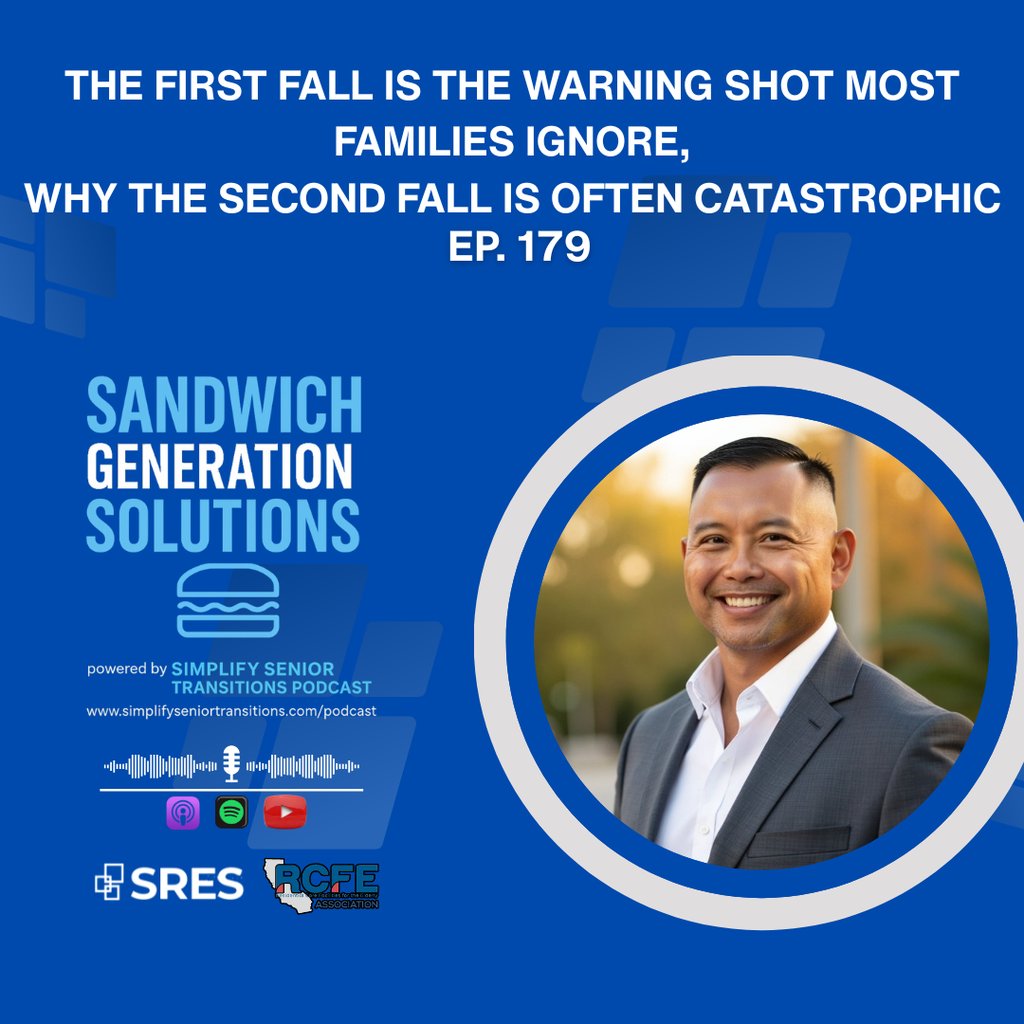
In the latest episode of Sandwich Generation Solutions, host Dale Corpus—a senior transition specialist and Seniors Real Estate Specialist (SRES) based right here in the Bay Area—shares a perspective that might stop you in your tracks. He warns that while families often brush off a parent’s first fall, it is rarely an isolated event—it is a warning shot.
Here’s what you’ll learn in this episode:
Why the “first fall” is actually a sign of systemic physical changes
The hidden dangers and escalating risks of waiting for a second fall
Why spending thousands on home modifications might not be the right financial move
Five practical steps to take immediately to protect your parent’s dignity and your peace of mind
The Trap of “I’m Fine”
We’ve all heard it. Mom trips on a rug, or Dad loses his balance in the garden. They insist, “I’m fine,” and because there are no broken bones, we breathe a sigh of relief and move on.
However, Dale points out that this is where families often miss the critical signal.
That first fall is evidence that the system keeping your parent safe—their balance, reaction time, vision, or judgment—has just failed. It often points to underlying issues like muscle weakness, neuropathy, medication side effects, or early cognitive decline.
Ignoring this warning shot doesn’t make the problem go away; it simply leaves the door open for a much more catastrophic event.
The Second Fall Changes Everything
The harsh truth is that once a senior falls, the risk of falling again increases dramatically.
In his work with families across Contra Costa, Alameda, Santa Clara, and San Mateo counties, Dale has seen a heartbreaking pattern: the first fall is brushed off, but the second fall leads directly to assisted living or memory care.
The second fall is usually worse because confidence has dropped, mobility has declined, and reaction times have slowed even further. This is when life-altering injuries occur—hip fractures, head trauma, and shoulder dislocations—that force families into emergency decisions under extreme pressure.
The Financial and Emotional Cost of Waiting
One of the most stressful challenges for Bay Area families is managing housing logistics.
Dale frequently sees families respond to a first fall by spending $20,000 to $40,000 on home modifications such as ramps, stair lifts, and bathroom remodels.
While this feels proactive, it can become a financial trap. Often, the parent still needs to move within 12 to 18 months as care needs increase faster than the home can safely support. Families are then left emotionally and financially stuck—having invested heavily in a home they now must sell to fund care.
The emotional toll is even heavier. After a serious second fall, adult children often wrestle with guilt:
“I knew this might happen.”
“I should have done something sooner.”
That guilt is real—but it is also avoidable when the first fall is treated as information rather than an inconvenience.
Practical Steps: Moving from Panic to Planning
So, what should you do if your parent has taken a tumble? Dale recommends five immediate steps:
Don’t minimize it — Even if they seem okay, take it seriously
Get a medical review — Check balance, vision, and medications
Assess the home honestly — Look for loose rugs, poor lighting, and hazards
Start conversations early — Avoid “You need to move”; talk about future support
Explore options before you need them — Tour communities and understand costs now
Families who plan after the first fall gain the luxury of time. You can thoughtfully evaluate housing options, manage downsizing without panic, and reduce family conflict.
Waiting for the second fall often leads to hospital discharge pressure, limited availability, and rushed decisions that no one feels good about.
Need Help Navigating a Senior Transition?
When a parent needs care and there’s a home involved, families often have more options than they realize. You don’t have to figure it out alone.
Care Funding Calculator
Estimate how income, assets, and home equity may help pay for senior care:
https://www.simplifyseniortransitions.com/care-funding-calculator
Podcast Episode Library
Browse conversations with senior living experts, elder law attorneys, home care leaders, financial professionals, and families navigating these decisions every day:
https://www.simplifyseniortransitions.com/podcastlibrary
Start Here - Personalized Guidance + Resources
Explore resources, ask questions using the AI Resource Explorer, or connect with Dale directly:
https://www.simplifyseniortransitions.com/starthere
P.S. Got news or an amazing story to share? Hit us up at dale@simplifyseniortransitions.com and you might be featured in our next episode! Remember, always check out the transcript for detailed insights. Happy listening!
Watch The Podcast Here

📞 GET IN TOUCH
📬 STAY INFORMED
Dale Corpus, SRES, RCFE
CA DRE# 01305153 | NMLS# 339169
📱 925-380-1657
© 2026. All rights reserved.
🔎 LEARN MORE



PROUD MEMBER OF