
Reverse Mortgage Truths: Separating Fact from Fiction for Bay Area Families
Understanding the facts behind reverse mortgages so your family can make informed decisions about senior care, housing, and home equity with confidence.
Dale Corpus
3/10/20263 min read
Reverse Mortgage Truths: Separating Fact from Fiction for Bay Area Families
Being an adult child helping aging parents transition to senior living is an incredibly tough job. If you are an overwhelmed family caregiver in the San Francisco Bay Area—especially in Contra Costa, Alameda, Santa Clara, San Mateo, San Francisco, Solano, or Napa counties—you are not alone. Between managing the emotional stress of changing family dynamics, choosing the right care options, navigating the physical exhaustion of downsizing, and figuring out the logistics of potentially selling a senior’s home, the to-do list can feel endless.
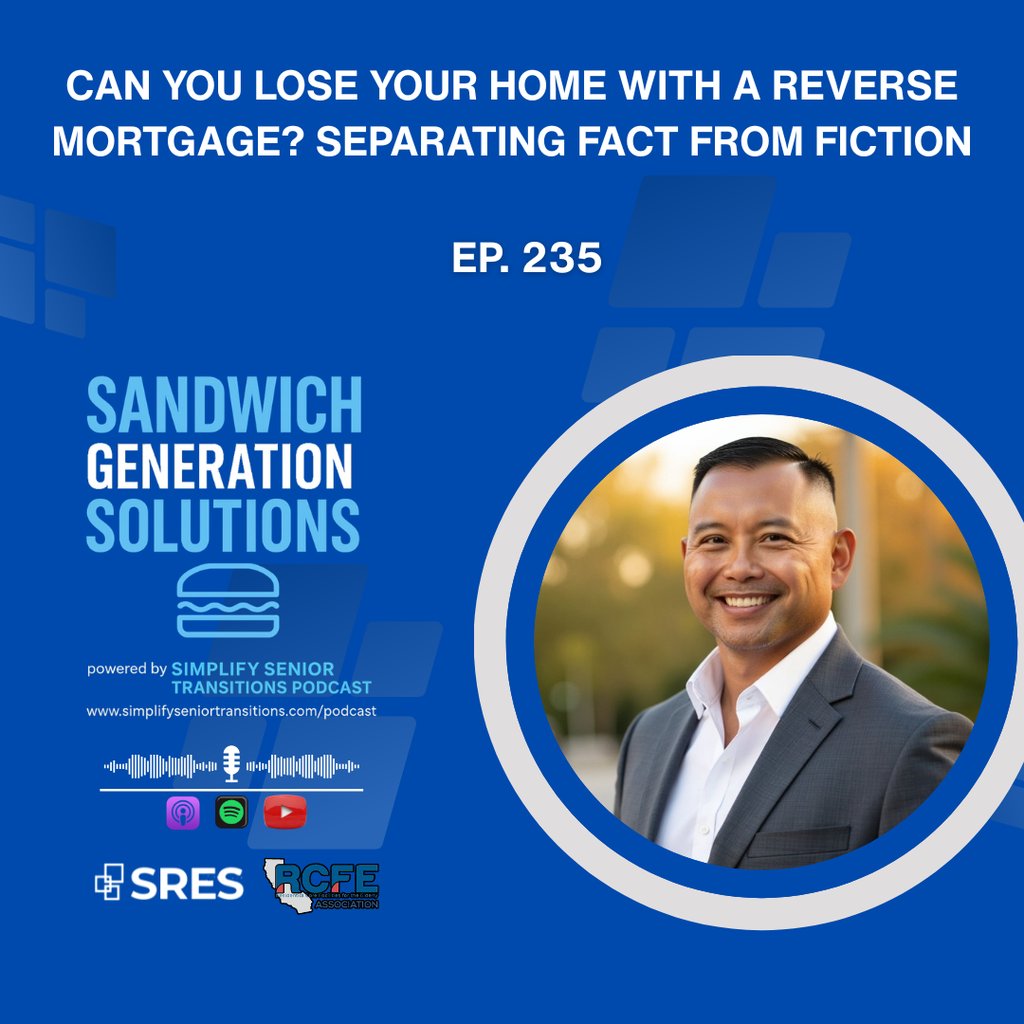
Figuring out how to pay for care, especially when a family home is involved, is often the biggest hurdle. To help families make informed decisions, Dale Corpus—a San Francisco Bay Area-based Senior Transition Strategist, Realtor, and Reverse Mortgage Specialist—tackled a highly misunderstood topic on a recent episode of Sandwich Generation Solutions.
Here's What You'll Learn in This Episode
Why the bank does not automatically take your parents' house when they get a reverse mortgage.
The essential, ongoing responsibilities that homeowners must maintain to keep their loan in good standing.
What actually happens to your inheritance and the options heirs have when the loan becomes due.
Why outliving a reverse mortgage isn't how these programs are designed to work.
How non-recourse protections safeguard your family if the loan balance outgrows the home's actual value.
The Weight of the Decision
Transitioning a parent to assisted living or modifying their current home so they can age in place comes with heavy financial questions. Often, families completely rule out reverse mortgages based on myths or outdated horror stories they heard 20 years ago.
Unfortunately, relying on misinformation might prevent you from utilizing a strategic tool that could actually help your family pay for necessary care.
Busting the Biggest Reverse Mortgage Myths
To bring clarity to these major financial decisions, Dale separates fact from fiction.
Myth 1 & 2: The Bank Takes the House & You Lose Ownership
No, the bank does not automatically take the house.
With a reverse mortgage, your parents remain the homeowners, and their names stay on the title, just like with a traditional mortgage.
However, this means they still have homeowner responsibilities. They must:
Pay property taxes
Maintain homeowners insurance
Keep the home in reasonable condition
Continue using it as their primary residence
Myth 3: The Kids Lose Their Inheritance
This is a massive concern for adult children.
A reverse mortgage doesn't automatically prevent you from inheriting the home.
When your parents permanently leave the property—whether they pass away or move into long-term care—the loan becomes due.
As an heir, you still have options. Depending on your circumstances, you may:
Sell the home
Refinance the loan
Pay off the balance and keep the property
Myth 4: They Can Outlive the Loan
Many worry their parents will get kicked out if they live "too long."
That’s simply not how these programs are designed.
As long as the borrower continues to meet the loan obligations—including paying taxes, maintaining insurance, and using the home as their primary residence—they generally have the right to remain in the home.
Myth 5: The Debt Will Exceed the Home's Value
This concern has some truth to it, but there is also an important safeguard.
Many federally insured reverse mortgages include non-recourse protection.
This means neither the borrower nor the heirs are responsible for repaying more than the home's value when the loan becomes due, provided all program requirements have been met.
The Bottom Line: Can You Actually Lose the Home?
Can a home be lost with a reverse mortgage?
The honest answer is yes—but probably not for the reasons you think.
If a homeowner stops paying property taxes, allows homeowners insurance to lapse, abandons the property, or otherwise fails to meet the loan requirements, there can be consequences.
The real issue isn't the reverse mortgage itself—it's ensuring the ongoing homeowner responsibilities are met.
Today's reverse mortgage programs have evolved significantly, and consumer protections have improved over the years. That’s why education should always come before making any financial decision.
Please note: Every family’s situation is different. This information is for educational purposes only and should not be considered legal, tax, or financial advice. Always consult qualified professionals regarding your specific circumstances.
Need Help Navigating a Senior Transition?
When a parent needs care and there’s a home involved, families often have more options than they realize. You don’t have to figure it out alone.
Care Funding Calculator
Estimate how income, assets, and home equity may help pay for senior care:
https://www.simplifyseniortransitions.com/care-funding-calculator
Podcast Episode Library
Browse conversations with senior living experts, elder law attorneys, home care leaders, financial professionals, and families navigating these decisions every day:
https://www.simplifyseniortransitions.com/podcastlibrary
Start Here - Personalized Guidance + Resources
Explore resources, ask questions using the AI Resource Explorer, or connect with Dale directly:
https://www.simplifyseniortransitions.com/starthere
P.S. Got news or an amazing story to share? Hit us up at dale@simplifyseniortransitions.com and you might be featured in our next episode! Remember, always check out the transcript for detailed insights. Happy listening!
Watch The Podcast Here

📞 GET IN TOUCH
📬 STAY INFORMED
Dale Corpus, SRES, RCFE
CA DRE# 01305153 | NMLS# 339169
📱 925-380-1657
© 2026. All rights reserved.
🔎 LEARN MORE



PROUD MEMBER OF