
Navigating Senior Care in the Bay Area: Why It Feels So Disconnected
Understanding the siloed system behind senior care and how to create alignment
Dale Corpus
2/15/20263 min read
Navigating Senior Care in the Bay Area: Why It Feels So Disconnected
If you are an adult child helping an aging parent transition to senior living in the San Francisco Bay Area—whether in Contra Costa, Alameda, Santa Clara, San Mateo, San Francisco, Solano, or Napa counties—you already know this is a monumental task.
The logistics alone can feel overwhelming.
Have you ever felt like everyone involved in your parent’s care is doing their job—but no one is working together?
You are not imagining it.
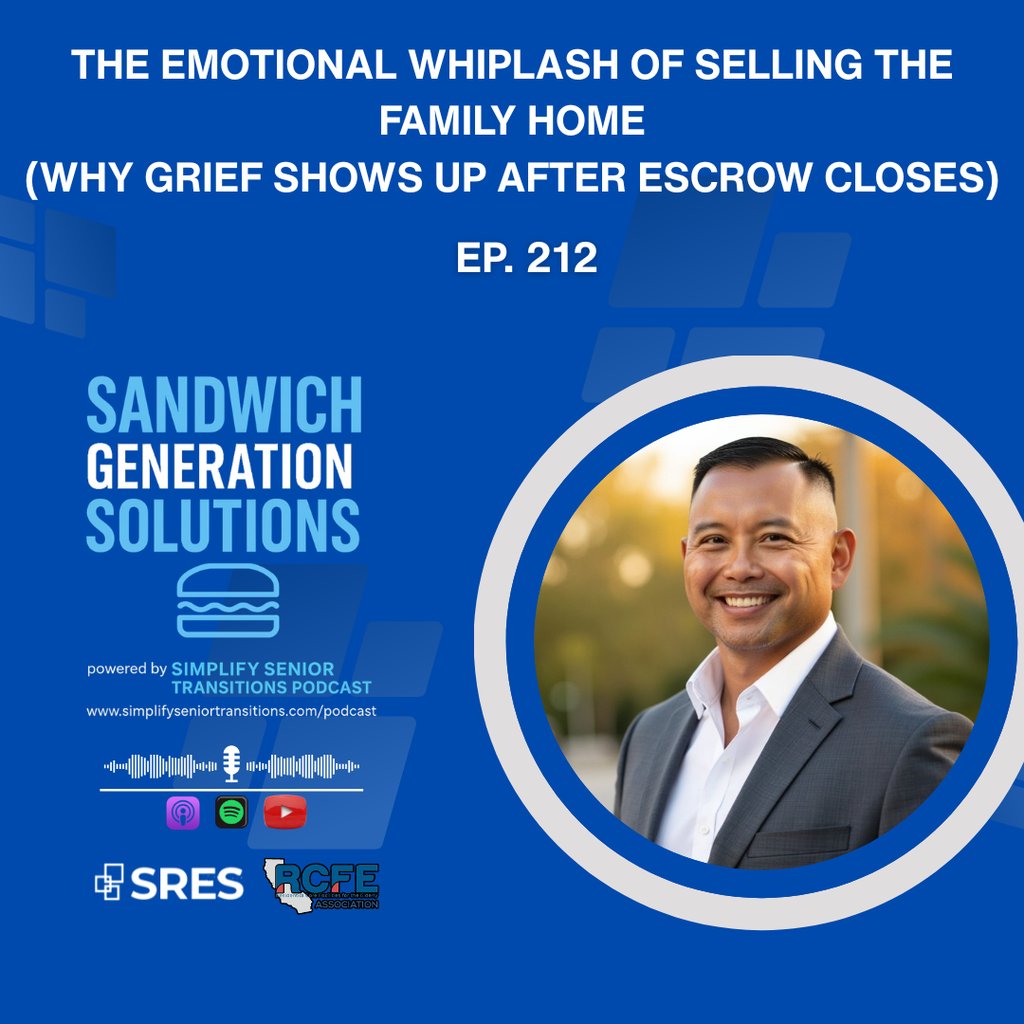
In a recent episode of Sandwich Generation Solutions, powered by the Simplify Senior Transitions Podcast, Bay Area senior transition and real estate expert Dale Corpus explains why this system often feels so disconnected for families.
Here's What You'll Learn in This Episode:
• Why collaboration in the senior care ecosystem is one of the hardest parts of the process
• How different professionals—from doctors to real estate agents—operate in separate silos with different priorities
• The hidden issue of timing, and why hospital discharge schedules rarely align with housing transitions
• Why there is no automatic “quarterback” coordinating care—and how that responsibility falls on families
• Practical steps to align communication, manage emotional stress, and bring everything together
The Silo Effect and Conflicting Priorities
When navigating senior living, families often face multiple interconnected challenges: choosing care options, downsizing a lifetime of belongings, and selling a senior’s home to fund care.
The reason this feels so disjointed is simple—senior care is not one unified system.
It is made up of multiple industries: healthcare, housing, home care, rehabilitation, legal services, and financial planning.
Each plays an important role, but each operates independently.
A doctor focuses on medical stabilization and discharge.
A financial advisor focuses on protecting long-term resources.
A real estate professional focuses on housing logistics and timing.
When these perspectives don’t align, it can feel like conflict—but it’s often just different priorities looking at the same situation.
Where Is the “Quarterback”?
One of the most surprising realizations for families is that there is no built-in coordinator.
There is no automatic “quarterback” managing the entire process from start to finish.
As a result, the responsibility for communication, coordination, timelines, and decision-making falls on the family—often on one adult child.
Even when professionals are well-intentioned, information tends to stay within each silo.
This leaves families trying to piece together fragmented updates, often without a clear, unified plan.
Navigating Misaligned Timelines and Emotional Stress
Timing is another major challenge.
Hospitals move quickly, often pushing for rapid discharge once a patient is stabilized.
Meanwhile, families need time to process decisions.
Steps like selling a home, downsizing, or choosing the right senior living community require careful planning.
When these timelines collide, families feel rushed—and uncertain.
Layer in the emotional stress of fear, guilt, and responsibility, and communication becomes even more difficult.
When emotions run high, even small misalignments can feel like major breakdowns.
Practical Tips for Overwhelmed Families
There is a way to create clarity.
Families who navigate this process more smoothly tend to:
• Ask for clarification across roles
Make sure each professional is working from the same information
• Bring conversations together early
Don’t wait until decisions become urgent
• Identify a central point of communication
Designate one person to streamline updates and decisions
Most importantly, recognize this:
Coordination does not happen automatically—it must be created intentionally.
When you shift from expecting a seamless system to actively building alignment, the process becomes much more manageable.
Need Help Navigating a Senior Transition?
When a parent needs care and there’s a home involved, families often have more options than they realize. You don’t have to figure it out alone.
Care Funding Calculator
Estimate how income, assets, and home equity may help pay for senior care:
https://www.simplifyseniortransitions.com/care-funding-calculator
Podcast Episode Library
Browse conversations with senior living experts, elder law attorneys, home care leaders, financial professionals, and families navigating these decisions every day:
https://www.simplifyseniortransitions.com/podcastlibrary
Start Here - Personalized Guidance + Resources
Explore resources, ask questions using the AI Resource Explorer, or connect with Dale directly:
https://www.simplifyseniortransitions.com/starthere
P.S. Got news or an amazing story to share? Hit us up at dale@simplifyseniortransitions.com and you might be featured in our next episode! Remember, always check out the transcript for detailed insights. Happy listening!
Watch The Podcast Here

📞 GET IN TOUCH
📬 STAY INFORMED
Dale Corpus, SRES, RCFE
CA DRE# 01305153 | NMLS# 339169
📱 925-380-1657
© 2026. All rights reserved.
🔎 LEARN MORE



PROUD MEMBER OF