
Navigating Reverse Mortgages After a Parent Passes Away: A Guide for Bay Area Families
Learn what really happens when a reverse mortgage becomes due, the options available to heirs, and how facts—not myths—can help families make confident decisions during an emotional time.
Dale Corpus
3/14/20263 min read
Navigating Reverse Mortgages After a Parent Passes Away: A Guide for Bay Area Families
Caring for an aging parent is a monumental act of love, but it is rarely easy. For family caregivers in the San Francisco Bay Area—especially those balancing life and care in Contra Costa, Alameda, Santa Clara, San Mateo, San Francisco, Solano, and Napa counties—the responsibility can often feel heavy. Between managing emotional stress, figuring out how to pay for senior care, choosing the right care options like assisted living or memory care, and handling the exhausting logistics of downsizing and selling a senior’s home, families have a lot on their plates.
If your parent took out a reverse mortgage and has recently passed away or transitioned into long-term care, you might be facing a fresh wave of anxiety and confusion.
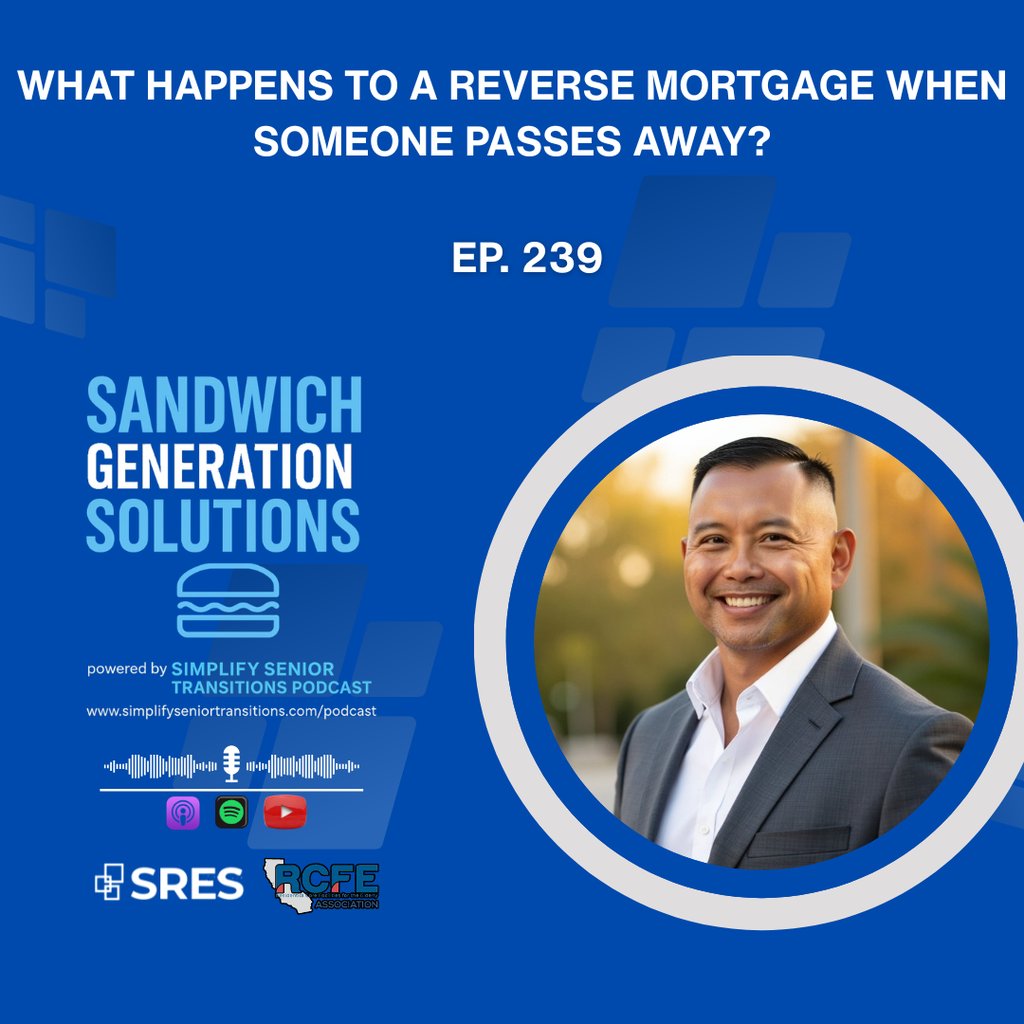
In a recent episode of Sandwich Generation Solutions, host Dale Corpus—a Bay Area Senior Transition Strategist, Realtor, and Reverse Mortgage Specialist—breaks down the process to help families replace fear and misinformation with actual facts.
Here's What You'll Learn in This Episode
Why the bank does not automatically get your parent's house.
What happens to the reverse mortgage when a borrower passes away or moves into care.
The three main options families have for handling the property.
How remaining home equity is distributed.
What "non-recourse protection" means if the home's value drops.
The biggest mistakes grieving families make when settling the loan.
The Bank Doesn't Own the Home
When a parent passes away, adult children often panic and ask, "Does the bank automatically get the house?"
It is one of the most common myths surrounding reverse mortgages that the lender somehow takes ownership of the property.
The truth is much simpler: the homeowner continues to own the home, and their name stays on the title.
A reverse mortgage is simply a loan secured by the home—not a transfer of ownership.
When your parent passes away, the home becomes part of their estate, exactly as it would with a traditional mortgage.
Navigating Your Options When the Loan Comes Due
When the last borrower permanently leaves the home—whether they pass away or move into a long-term care facility—the reverse mortgage will eventually become due.
Because some families assume the loan continues indefinitely, this can be an unexpected surprise.
However, the most important thing you can do is not panic.
You have time to evaluate your options.
Depending on your family's unique circumstances, you may choose to:
Sell the home and use the proceeds to pay off the reverse mortgage.
Refinance the loan into a traditional mortgage if you want to keep the home and qualify.
Walk away and not retain the home if keeping it doesn't make financial sense.
What Happens to the Home's Equity?
Many families worry that once a reverse mortgage is in place, there will be nothing left for the children to inherit.
This is simply not true.
If you sell the home, any equity remaining after the loan is paid off belongs entirely to the estate—not the lender and not the government.
For example, if your mother's home is worth $1 million and the reverse mortgage balance is $400,000, the remaining equity goes to the family.
But what if the loan balance has grown to be more than the home's value?
Fortunately, many FHA-insured reverse mortgages feature built-in non-recourse protection.
This means that neither the estate nor the heirs are personally responsible for paying more than the home's value out of pocket when settling the loan.
Moving Forward with Facts, Not Fear
When you are already grieving the loss of a loved one, the last thing you need is added confusion.
The biggest mistakes families make usually come from acting on misinformation—like advice from a neighbor or something read online—or waiting too long to contact the loan servicer.
Don't let myths make your decisions.
Let facts guide you.
Because every loan program and family situation is different, it is highly recommended to consult qualified legal, tax, and financial professionals to evaluate your specific circumstances.
Need Help Navigating a Senior Transition?
When a parent needs care and there’s a home involved, families often have more options than they realize. You don’t have to figure it out alone.
Care Funding Calculator
Estimate how income, assets, and home equity may help pay for senior care:
https://www.simplifyseniortransitions.com/care-funding-calculator
Podcast Episode Library
Browse conversations with senior living experts, elder law attorneys, home care leaders, financial professionals, and families navigating these decisions every day:
https://www.simplifyseniortransitions.com/podcastlibrary
Start Here - Personalized Guidance + Resources
Explore resources, ask questions using the AI Resource Explorer, or connect with Dale directly:
https://www.simplifyseniortransitions.com/starthere
P.S. Got news or an amazing story to share? Hit us up at dale@simplifyseniortransitions.com and you might be featured in our next episode! Remember, always check out the transcript for detailed insights. Happy listening!
Watch The Podcast Here

📞 GET IN TOUCH
📬 STAY INFORMED
Dale Corpus, SRES, RCFE
CA DRE# 01305153 | NMLS# 339169
📱 925-380-1657
© 2026. All rights reserved.
🔎 LEARN MORE





PROUD MEMBER OF