
More Than a Move: How Storytelling Preserves Identity During Senior Transitions
A Bay Area guide for families navigating assisted living, memory care, and emotional connection
Dale Corpus
12/9/20254 min read
More Than Just a Move: Honoring Identity During Senior Transitions (Bay Area Focus)
Hi there, fellow Sandwich Generation members!
If you’re juggling your own life, career, and family while navigating the huge, heartbreaking, and often exhausting logistics of moving an aging parent in the Bay Area—whether they’re leaving a long-time home in San Jose, transitioning to assisted living in Walnut Creek, or facing memory care in Napa—you are not alone.
As a senior transition specialist and real estate expert based right here in the San Francisco Bay Area, I know that when a senior moves, it’s not just about selling the house or downsizing their belongings; it’s about their whole world shifting.
A Softer, More Powerful Approach to Senior Transitions
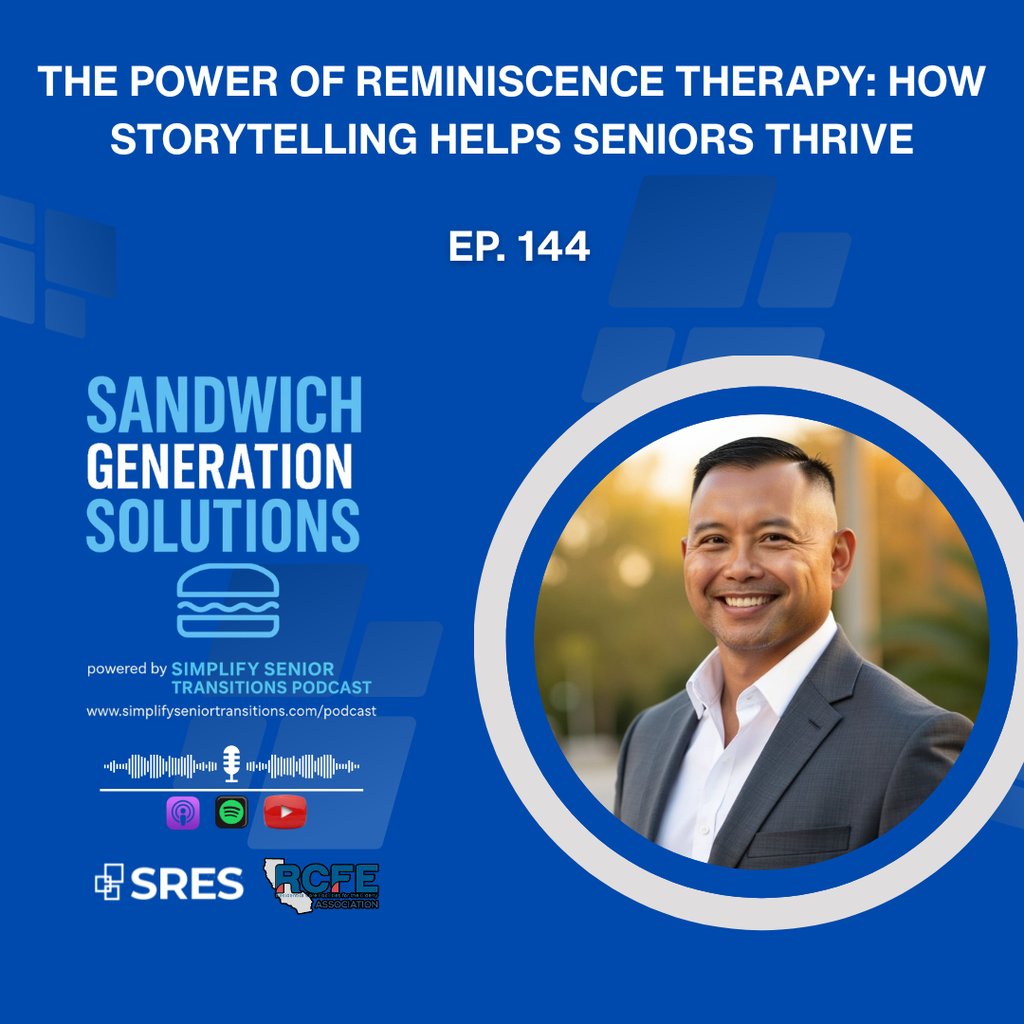
In this week’s episode of Sandwich Generation Solutions, we took a softer—but incredibly powerful—approach, discussing a tool that can transform difficult transitions into meaningful moments of connection: reminiscence therapy.
What You’ll Learn in This Episode
In this episode, you’ll learn why intentional storytelling, memory sharing, and reflection help seniors thrive emotionally, cognitively, and socially—especially during big life changes.
We explore the science behind how recalling long-term memories activates the brain and restores a senior’s sense of self. Crucially, you’ll discover how to use reminiscence therapy to manage the emotional stress of transitions, shifting the focus from what your loved one is losing to what you are honoring.
Finally, we share practical, gentle steps you can start implementing today, even if you’re pressed for time.
The Emotional Gap: Addressing Loss of Identity
For families across Contra Costa, Alameda, Santa Clara, and beyond, the logistical challenges—choosing care options, handling the emotional weight of downsizing, or figuring out what to do with the senior’s home—can feel overwhelming.
But behind those logistics is a deeper emotional challenge.
When a senior transitions into assisted living or memory care, they are often leaving behind their routine, their sense of purpose, their role in the family, and their independence.
That loss can be subtle or overwhelming, leading to loneliness, depression, or cognitive decline.
Reminiscence therapy helps bridge this gap by restoring something vital: identity.
It sends a powerful message to seniors:
“My life has meaning. My story is worth telling. I still matter.”
This approach shifts the focus for families from the pain of loss to the healing act of honoring a life lived.
Storytelling: Healing for the Brain and the Heart
So what exactly is reminiscence therapy?
It is the intentional act of encouraging seniors to remember, reflect, and share their life experiences through conversation, photos, music, meaningful objects, or stories. It is not about testing memory or correcting details—it is about honoring a life.
Science shows that recalling emotionally meaningful, long-term memories activates different parts of the brain, reduces anxiety, improves mood, and strengthens neural connections.
For those experiencing cognitive decline or dementia, this is especially powerful because long-term memory often remains accessible even as short-term memory fades. That’s why a loved one may forget what they ate for breakfast but vividly recall their wedding day from 60 years ago.
Reminiscence therapy meets them where their brain still works best.
We shared the story of the Rodriguez family from Redwood City. After their mother, Elena, moved into assisted living, she became withdrawn. A faded photograph revealed something no one knew—Elena had run a small bakery in San Francisco’s Mission District in the 1970s.
By bringing old photos, recording recipes, and involving staff in sharing her baking stories, Elena’s posture changed. Her appetite improved. She became engaged again.
Her identity was restored.
Practical Steps for Connection
The key to successful reminiscence therapy isn’t perfection—it’s presence.
During high-stress periods like move-ins or memory care transitions common across San Mateo or Solano counties, resist the urge to rush or correct details. If a story brings joy, calm, or connection, that is success—even if the details change.
This process is also deeply healing for adult children. You often learn things you never knew and begin to see your parent as a full human being, not just someone who needs help.
That perspective helps reduce regret and strengthens connection in the present moment.
Try These Simple Steps Today:
Ask one open-ended question
“What was your favorite job?” or “What was your childhood home like?”Bring one object or photo
Meaningful items spark powerful memories.Record and write
Use your phone to save stories for the future.Allow silence
Don’t rush. Five minutes of presence can change an entire day.
Many Bay Area senior living communities already use memory walls and life storyboards. When families participate, storytelling becomes a bridge—not a goodbye.
Need Help Navigating a Senior Transition?
When a parent needs care and there’s a home involved, families often have more options than they realize. You don’t have to figure it out alone.
Care Funding Calculator
Estimate how income, assets, and home equity may help pay for senior care:
https://www.simplifyseniortransitions.com/care-funding-calculator
Podcast Episode Library
Browse conversations with senior living experts, elder law attorneys, home care leaders, financial professionals, and families navigating these decisions every day:
https://www.simplifyseniortransitions.com/podcastlibrary
Start Here - Personalized Guidance + Resources
Explore resources, ask questions using the AI Resource Explorer, or connect with Dale directly:
https://www.simplifyseniortransitions.com/starthere
P.S. Got news or an amazing story to share? Hit us up at dale@simplifyseniortransitions.com and you might be featured in our next episode! Remember, always check out the transcript for detailed insights. Happy listening!
Watch The Podcast Here

📞 GET IN TOUCH
📬 STAY INFORMED
Dale Corpus, SRES, RCFE
CA DRE# 01305153 | NMLS# 339169
📱 925-380-1657
© 2026. All rights reserved.
🔎 LEARN MORE


PROUD MEMBER OF