
Home Health, Reimagined: From Hospital to Healing at Home
Alvin Mojica shares how Triage Home Health brings heart, expertise, and innovation to families navigating care transitions in the Bay Area
Dale Corpus
6/29/20253 min read
Navigating Senior Care: Understanding Home Health and Why It Matters for Families
Navigating senior care can often feel like solving a complex puzzle with missing pieces.
For many families in the San Francisco Bay Area—across Contra Costa, Alameda, Santa Clara, San Mateo, San Francisco, Solano, and Napa counties—the responsibility of caring for aging parents is layered on top of careers, raising children, and managing everyday life.
This “sandwich generation” experience can quickly become overwhelming.
That’s why having clarity around care options is so important.
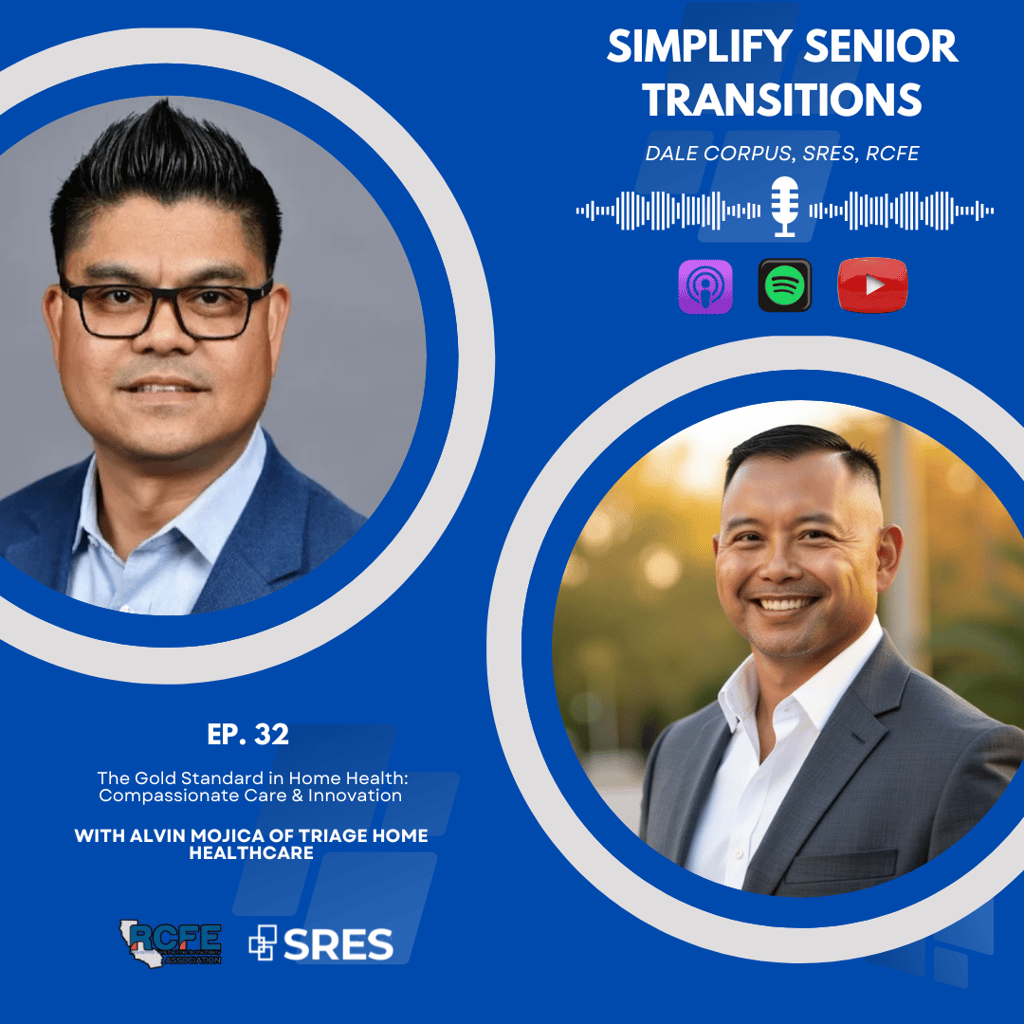
In a recent episode of the Simplify Senior Transitions Podcast, Dale Corpus sits down with Alvin Mojica, CEO and Managing Partner of Triage Home Health, to break down what families actually need to know about home health care.
Here’s What You’ll Learn in This Episode:
• What home health care includes—and how it differs from home care and hospice
• How home health supports the transition from hospital to home
• Common myths about cost and coverage (including Medicare)
• Eligibility requirements and why a doctor’s order matters
• How care plans help prevent hospital readmissions
• The role of a full care team in supporting recovery and quality of life
Understanding Home Health: More Than You Think
Many families are unaware of what home health actually provides.
Home health is skilled, medical care delivered at home, which can include:
• Registered nurses (RNs)
• Physical, occupational, and speech therapists
• Social workers
• Home health aides
• Dietitians and nutritionists
This type of care focuses on recovery, rehabilitation, and helping individuals remain safely at home.
It is different from:
• Home care (non-medical assistance)
• Hospice care (end-of-life comfort care)
One key takeaway: home health services are often covered by Medicare, which removes a major financial barrier for families.
Bridging the Gap Between Hospital and Home
One of the most critical—and confusing—moments for families is hospital discharge.
Home health plays a vital role in ensuring a smooth transition by:
• Starting care within 24–48 hours
• Managing medications and treatments
• Providing wound care and therapy
• Teaching patients how to use medical equipment
Most importantly, home health teams act as advocates—communicating with doctors, hospitals, and families to ensure continuity of care.
Avoiding Common Mistakes During Transitions
Families often face challenges during this stage, including:
• Not asking enough questions
• Not understanding available options
• Feeling unprepared or unsupported
Alvin emphasizes that families should:
• Stay involved in care decisions
• Ask questions early and often
• Interview providers to find the right fit
Being proactive can significantly improve outcomes.
Supporting Independence While Providing Care
A common concern is that bringing care into the home will reduce independence.
In reality, the goal of home health is the opposite—to help individuals maintain independence safely.
This is done by:
• Involving seniors in decision-making
• Setting achievable goals
• Creating a safe home environment
Support also extends beyond medical care.
Social workers, for example, help families navigate financial assistance, community resources, and long-term planning.
Home health aides assist with daily routines, helping prevent complications and hospital visits.
Planning for the Future
Alvin recommends a comprehensive approach to planning:
• Emotional planning
• Financial planning
• Medical planning
• Identifying decision-makers and support systems
Families who plan ahead tend to experience less stress and more clarity during transitions.
The Role of Innovation in Home Health
Technology is rapidly improving how care is delivered.
Emerging tools include:
• Remote patient monitoring (RPM)
• Telehealth and virtual visits
• AI-assisted support and care coordination
• Improved electronic medical records (EMRs)
These innovations are making care more accessible, efficient, and personalized.
A Better Way Forward for Families
Senior care decisions don’t have to feel overwhelming.
With the right information and support, families can make confident, informed choices that prioritize both safety and quality of life.
Need Help Navigating a Senior Transition?
When a parent needs care and there’s a home involved, families often have more options than they realize. You don’t have to figure it out alone.
Care Funding Calculator
Estimate how income, assets, and home equity may help pay for senior care:
https://www.simplifyseniortransitions.com/care-funding-calculator
Podcast Episode Library
Browse conversations with senior living experts, elder law attorneys, home care leaders, financial professionals, and families navigating these decisions every day:
https://www.simplifyseniortransitions.com/podcastlibrary
Start Here - Personalized Guidance + Resources
Explore resources, ask questions using the AI Resource Explorer, or connect with Dale directly:
https://www.simplifyseniortransitions.com/starthere
P.S. Got news or an amazing story to share? Hit us up at dale@simplifyseniortransitions.com and you might be featured in our next episode! Remember, always check out the transcript for detailed insights. Happy listening!
Watch The Podcast Here

📞 GET IN TOUCH
📬 STAY INFORMED
Dale Corpus, SRES, RCFE
CA DRE# 01305153 | NMLS# 339169
📱 925-380-1657
© 2026. All rights reserved.
🔎 LEARN MORE


PROUD MEMBER OF