
Funding Home Care: Equity Strategies for Aging in the Bay Area
Learn how families can use home equity strategically while evaluating care, housing, and financial options for aging loved ones.
Dale Corpus
3/6/20263 min read
Funding Home Care: Equity Strategies for Aging in the Bay Area
If you are an adult child helping an aging parent navigate the complex world of senior living, you already know how overwhelming the journey can be.
For overwhelmed family caregivers across the San Francisco Bay Area—especially in Contra Costa, Alameda, Santa Clara, San Mateo, San Francisco, Solano, and Napa counties—the rising costs of care and the emotional weight of these life-altering decisions can feel like a heavy, isolating burden.
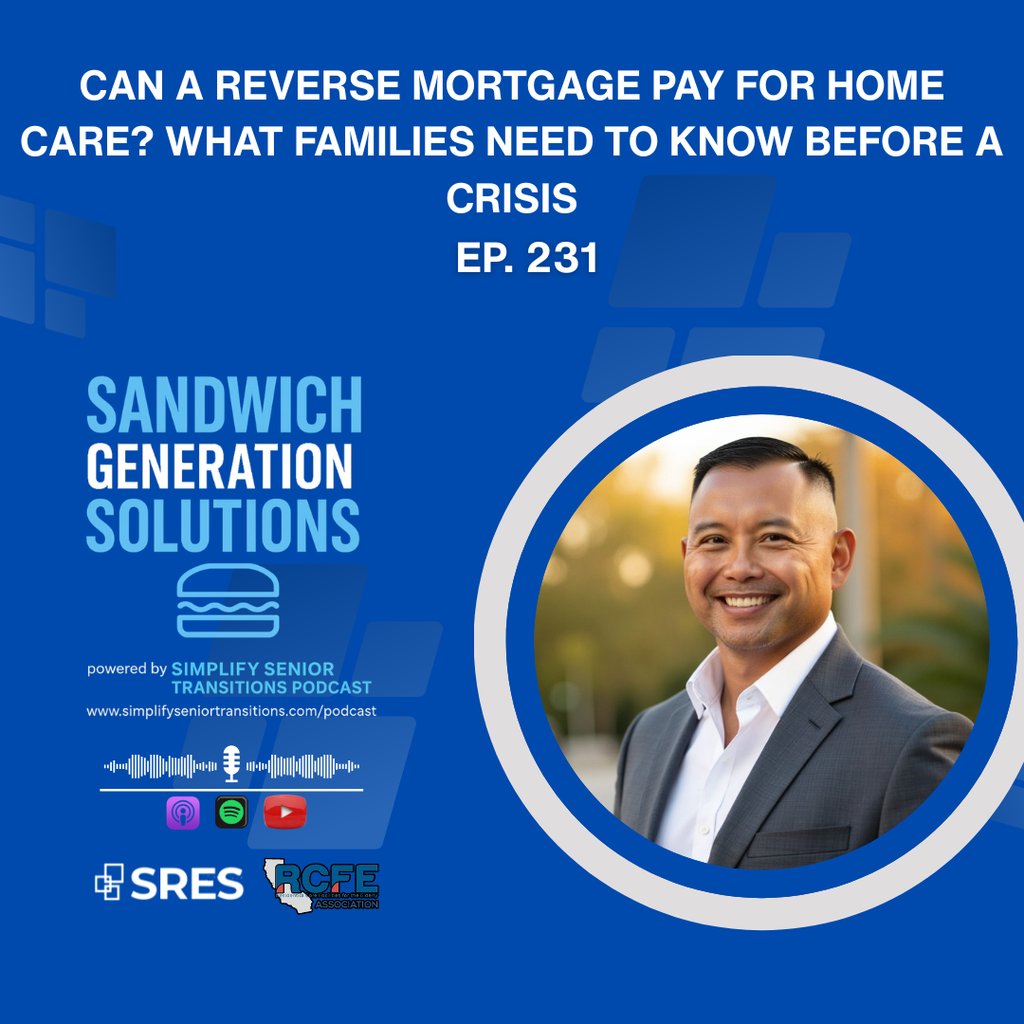
In the latest episode of the Sandwich Generation Solutions series, powered by the Simplify Senior Transitions Podcast, host Dale Corpus—a local Senior Transition Strategist, Realtor, and Reverse Mortgage Specialist—dives deep into practical strategies for funding home care and aging in place.
Here's What You'll Learn in This Episode
Why the escalating cost of home care is pushing families to seek creative financial solutions.
How a reverse mortgage might help fund in-home care, necessary home modifications, or daily medical expenses.
The biggest myths surrounding reverse mortgages, including the common fear that "the bank takes the house."
Why asking, "What are we trying to accomplish?" is the most critical first step before choosing any care or financial option.
The profound importance of planning before a medical or emotional crisis hits to avoid rushed, stressful decisions.
The High Cost of Care and the Caregiver’s Burden
When Mom or Dad wants to stay in their own home, it sounds like a beautiful, comforting plan.
But as their needs inevitably increase—from simply needing help with meal preparation to requiring full-time daily care—families quickly discover a harsh reality: home care can be incredibly expensive.
For adult children balancing their own careers and children while managing a parent's needs, this often leads to immense emotional stress and the very real risk of caregiver burnout.
You may find yourself wondering how to pay for this specialized care without rapidly depleting your family's hard-earned savings.
Unlocking Options: Is a Reverse Mortgage the Answer?
Many people mistakenly believe a reverse mortgage is a last-resort option only meant for those who have completely run out of money.
However, this is a massive misconception.
As Dale explains, evaluating home equity is really about creating sustainable options.
For eligible homeowners, a reverse mortgage allows them to access a portion of their home's equity while continuing to live in the house.
These flexible funds can be used to pay for professional home care, modify the home for safety, or improve monthly cash flow.
And contrary to the popular myth that "the bank takes the house," homeowners actually retain ownership of their property.
Navigating Downsizing, Selling, and Choosing Care Options
While leveraging equity can be a powerful tool, a reverse mortgage isn’t the right solution for every family.
It may not make sense if your parent plans to move in the near future or if other financial resources are better suited to the situation.
The true goal of senior transition planning is to look at the entire picture.
Instead of jumping straight to financial tools, families should first ask:
"What are we trying to accomplish?"
Are you trying to avoid moving Mom to assisted living, or is a specialized memory care community actually the safest choice?
Would remaining at home reduce stress, or would additional support and social opportunities improve quality of life?
Sometimes, the best path for managing emotional stress and improving safety involves selling a senior’s home and downsizing to a more manageable environment.
Every family is unique, and finding the right strategy means carefully evaluating care needs, family dynamics, financial resources, and housing goals.
Stop Waiting for a Crisis to Strike
One of the most practical lessons from this episode is the importance of starting these conversations early.
Far too often, families wait until an unexpected crisis—a severe fall, sudden hospitalization, or dementia diagnosis—forces immediate action.
Making housing and medical decisions under immense pressure often leaves families feeling trapped between difficult choices.
Planning ahead creates options.
It allows your family to evaluate alternatives thoughtfully and make more confident decisions regarding your parents' future.
Need Help Navigating a Senior Transition?
When a parent needs care and there’s a home involved, families often have more options than they realize. You don’t have to figure it out alone.
Care Funding Calculator
Estimate how income, assets, and home equity may help pay for senior care:
https://www.simplifyseniortransitions.com/care-funding-calculator
Podcast Episode Library
Browse conversations with senior living experts, elder law attorneys, home care leaders, financial professionals, and families navigating these decisions every day:
https://www.simplifyseniortransitions.com/podcastlibrary
Start Here - Personalized Guidance + Resources
Explore resources, ask questions using the AI Resource Explorer, or connect with Dale directly:
https://www.simplifyseniortransitions.com/starthere
P.S. Got news or an amazing story to share? Hit us up at dale@simplifyseniortransitions.com and you might be featured in our next episode! Remember, always check out the transcript for detailed insights. Happy listening!
Watch The Podcast Here

📞 GET IN TOUCH
📬 STAY INFORMED
Dale Corpus, SRES, RCFE
CA DRE# 01305153 | NMLS# 339169
📱 925-380-1657
© 2026. All rights reserved.
🔎 LEARN MORE



PROUD MEMBER OF