
Beyond the Brochure: How to Tour Senior Living the Right Way
A Practical Guide for the Sandwich Generation
Dale Corpus
1/19/20263 min read
Beyond the Brochure: What Bay Area Families Actually Need to Know When Touring Senior Living
If you are reading this, you are likely part of the sandwich generation—balancing your own career and children while navigating the emotional and logistical maze of helping aging parents.
Whether you’re in Contra Costa, Alameda, Santa Clara, San Mateo, San Francisco, Solano, or Napa, the pressure can feel relentless.
You may be managing the downsizing of a home filled with decades of memories, coordinating with realtors in a shifting Bay Area market, or trying to research care options while staying afloat emotionally. Often, families feel forced into quick decisions after a sudden fall or hospitalization.
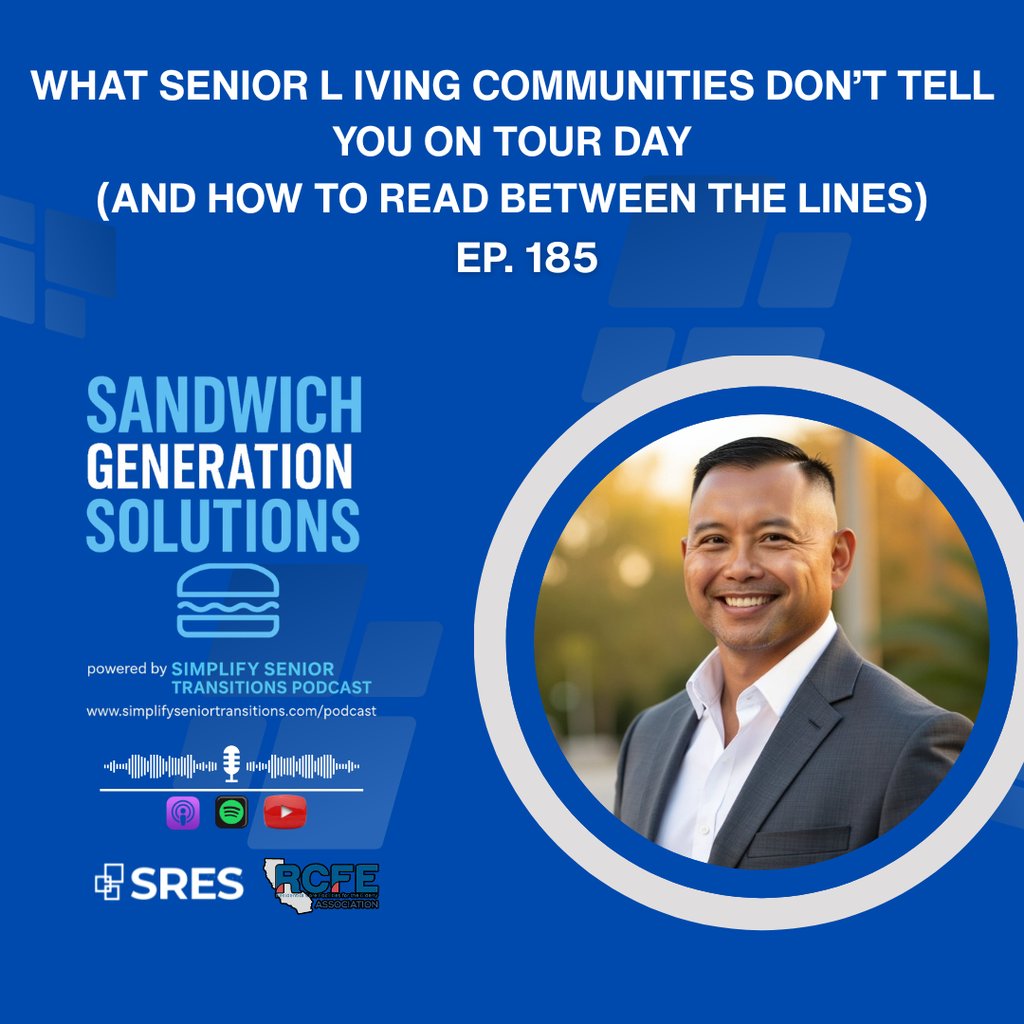
In the latest episode of Sandwich Generation Solutions, host Dale Corpus—a Senior Transition Specialist and real estate expert—pulls back the curtain on senior living tours and what families really need to be paying attention to.
Here’s what you’ll learn in this episode:
The “highlight reel” reality: why what you see on a scheduled tour doesn’t always reflect daily life
The unspoken signals that reveal staffing and resident engagement issues
The dining trap: why a beautiful menu doesn’t matter if your parent needs help eating
How to avoid the “second move” by asking better questions early
Strategic touring tips so you visit like a professional—not just a worried child
The “Highlight Reel” vs. Reality
Have you ever left a senior living tour thinking, “This place is beautiful—maybe this is the one”?
The lobby is spotless, lunch smells great, and everyone is smiling. Dale explains that this experience is intentional. Tours are typically scheduled mid-morning or early afternoon when staffing levels are highest and residents are most alert.
While this isn’t deception, it is a highlight reel. It doesn’t show overnight staffing levels, weekend coverage, or response times during shift changes. For families in San Mateo or Santa Clara already worried about the financial impact of care, assuming that a calm Tuesday morning reflects 24/7 reality can lead to regret.
Digging Deeper: Staffing and Dining
Two of the biggest concerns for families are safety and nutrition.
On tour day, dining rooms often resemble restaurants with attentive service. But Dale urges families to look closer. One key question many overlook is: How are dietary needs handled long-term?
He shares stories of families in San Jose who loved the food presentation—only to later discover their parent was losing weight because no one was consistently available to assist with eating.
Staffing deserves the same scrutiny. Don’t just ask, “How many staff are on site?” Ask about turnover, night coverage, and how many caregivers are responsible for residents during overnight shifts. In one case, a family learned too late that two caregivers were covering more than 40 residents overnight. The information wasn’t hidden—it just wasn’t volunteered.
The Trauma of the “Second Move”
One of the most painful scenarios for families is moving a parent into a community, selling the family home, and settling in—only to be told a year later that the facility can no longer meet the parent’s needs.
Dale discusses a family in Alameda County whose mother had to move twice in 18 months because they didn’t ask about flexibility in care levels. Second moves are traumatic for seniors and emotionally exhausting for adult children.
To avoid this, families must ask uncomfortable questions early:
What happens if my parent needs more care?
How often are care levels reassessed?
How to Tour Strategically
When you’re juggling downsizing, selling a home, and emotional stress, your brain often shifts into survival mode. Urgency shuts down critical thinking.
To counter this, Dale recommends treating tours as information-gathering missions—not reassurance exercises.
Visit twice: Once during a scheduled tour and again at a different time or day
Watch the staff: Notice eye contact, tone, and how small requests are handled
Bring a neutral professional: Emotions fade, but details don’t—an experienced third party can spot what you might miss
Need Help Navigating a Senior Transition?
When a parent needs care and there’s a home involved, families often have more options than they realize. You don’t have to figure it out alone.
Care Funding Calculator
Estimate how income, assets, and home equity may help pay for senior care:
https://www.simplifyseniortransitions.com/care-funding-calculator
Podcast Episode Library
Browse conversations with senior living experts, elder law attorneys, home care leaders, financial professionals, and families navigating these decisions every day:
https://www.simplifyseniortransitions.com/podcastlibrary
Start Here - Personalized Guidance + Resources
Explore resources, ask questions using the AI Resource Explorer, or connect with Dale directly:
https://www.simplifyseniortransitions.com/starthere
P.S. Got news or an amazing story to share? Hit us up at dale@simplifyseniortransitions.com and you might be featured in our next episode! Remember, always check out the transcript for detailed insights. Happy listening!
Watch The Podcast Here

📞 GET IN TOUCH
📬 STAY INFORMED
Dale Corpus, SRES, RCFE
CA DRE# 01305153 | NMLS# 339169
📱 925-380-1657
© 2026. All rights reserved.
🔎 LEARN MORE



PROUD MEMBER OF